In the food industry, strict hygiene requirements
The food industry faces a particularly rigorous regulatory framework. Every material used must guarantee the safety of the products transported or packaged, while respecting strict standards related to food contact.
Thus, food industry professionals must design packaging that guarantees no migration of substances into food and the ability to withstand temperature variations ranging from sub-zero temperatures to hot environments.
Beyond regulations, manufacturers must also ensure the preservation of the organoleptic qualities (taste, texture, smell) and the microbiological safety of food. The choice of materials therefore becomes strategic to guarantee the overall quality of the food chain. And with this in mind, it’s possible to turn to the family of plastic materials.
Our plastic materials adapted to the needs of the food industry
Polypropylene (PP)
Polypropylene is currently the benchmark material for the food industry. Versatile, robust, and reliable, it is at the heart of most of our solutions, both in our standard product ranges and in the creation of custom packaging.
Particularly valued for its thermal and chemical resistance, PP is perfectly suited for applications in direct contact with food. It is therefore widely used for reusable containers, trays, and logistics crates. This material also offers high durability, allowing it to withstand intensive washing cycles without any loss of performance.
PET & R-PET
PET (polyethylene terephthalate) is an essential material for food packaging thanks to its transparency and barrier properties. Among its advantages are effective protection against oxygen and moisture, good mechanical resistance, and a high degree of adaptability to rigid food packaging. R-PET, derived from recycling, helps reduce the environmental footprint by limiting dependence on petroleum resources while maintaining performance suitable for a wide range of uses.
Expanded Polystyrene (EPS)
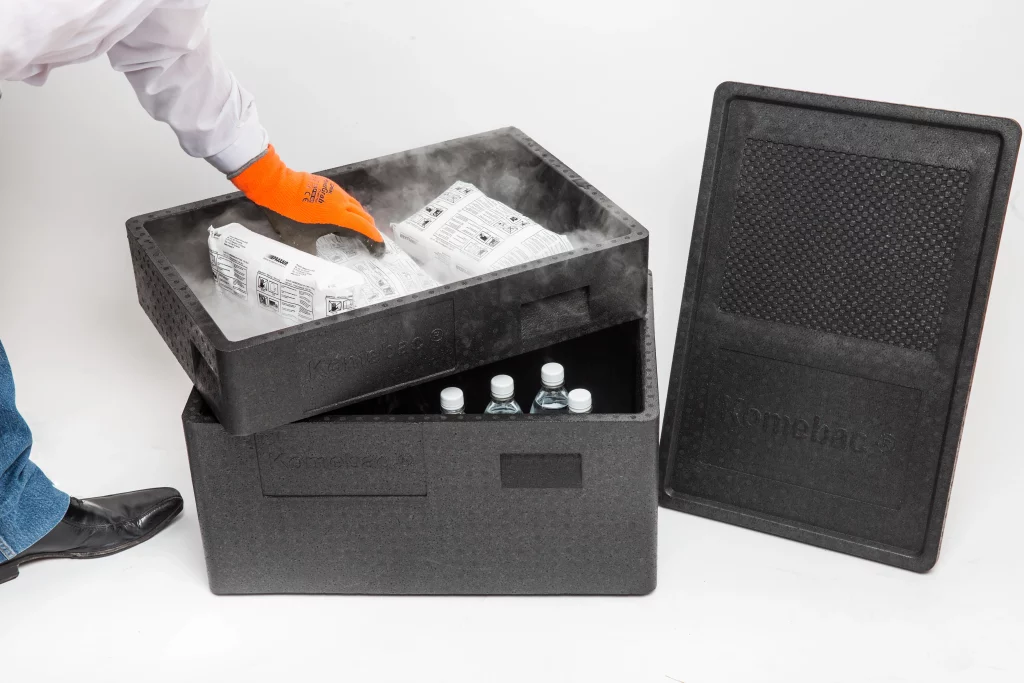
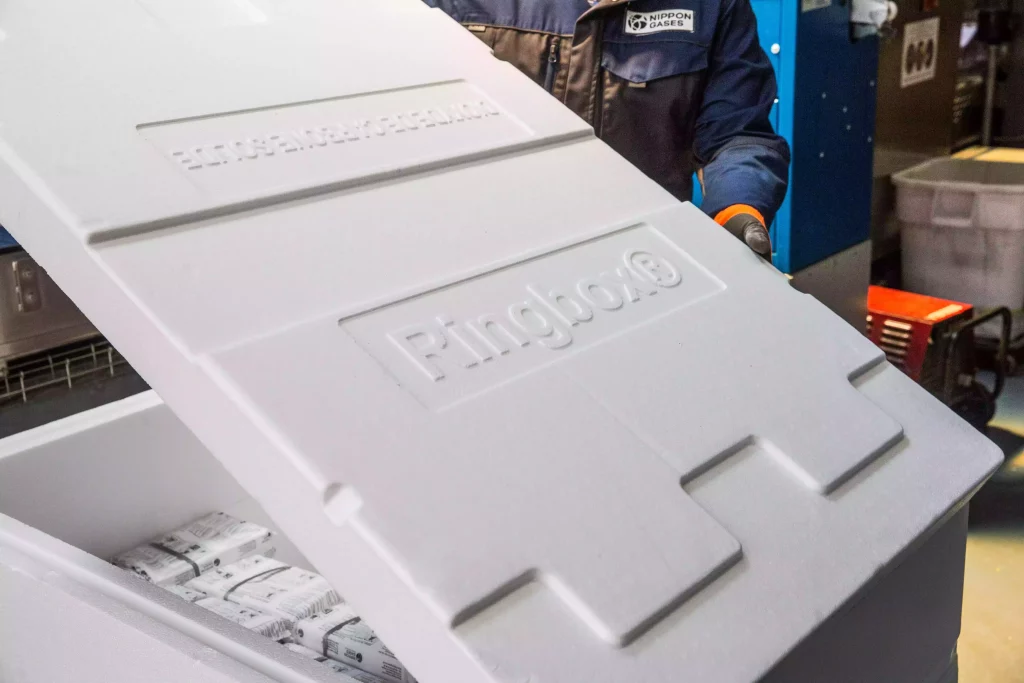
EPS is widely used in the food industry for its exceptional insulating properties. It effectively maintains the temperature of sensitive products, thus preserving the cold chain throughout the logistics process.
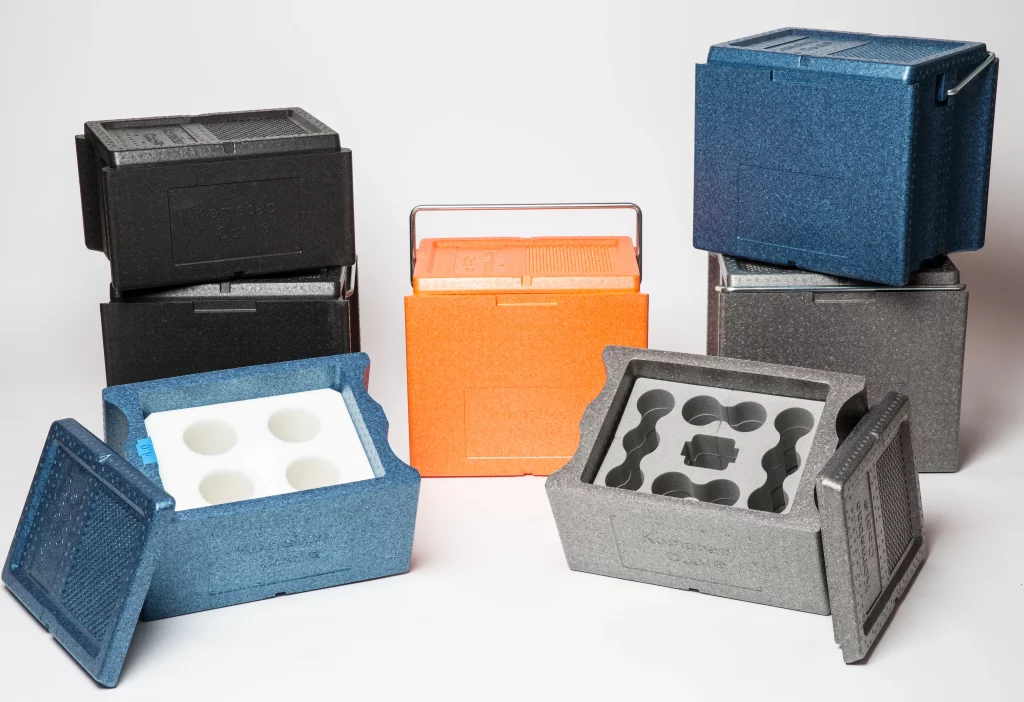
It is particularly well-suited for insulated boxes, transporting fresh or frozen products, and protective packaging. Its lightness and shock absorption capacity make it a material of choice for securing products during transport.
New products from Knauf Industries
We also develop our own new products to meet specific needs:
Neops®
Neops® is a certified cellular material derived from biomass and an alternative to fossil-based EPS. Thanks to a REDcert² certified mass balance approach, it reduces dependence on fossil resources while contributing to a circular economy. Neops® maintains the same technical, visual, and thermal performance as conventional EPS and remains recyclable through existing EPS recycling streams.
KapSeal®
KapSeal® is designed to guarantee optimal sealing of food packaging. Its characteristics provide enhanced protection against contamination, improved product preservation, and adaptability to specific technical applications. It is particularly relevant for products requiring an effective barrier against air or moisture.
KapClear®
KapClear® is the transparent version of KapSeal®, based on a PP formulation proprietary to Knauf Industries. It combines the same technical performance in terms of sealing and thermal resistance with a major aesthetic advantage: highlighting the freshness and quality of the products. This material is ideal for packaging where visibility, protection, and compatibility with pasteurization and microwave heating are essential.
KapLight®
KapLight® is a material chosen primarily for its lightness and mechanical properties, which are well-suited to the demands of the food industry. A black material, but without the addition of carbon black, KapLight® can be detected in sorting centers, enabling its recycling.
R’Kap®
R’Kap® is a plastic material used by Knauf Industries in the food industry, allowing manufacturers to participate in a circular economy approach. It is a certified single-material made from post-consumer recycled plastics*.
*These claims are substantiated; please contact us for more information.