Article abstract:
- Global challenges Transporting pharmaceutical, agri-food or cosmetic products over long distances while maintaining the cold chain, while complying with ATP, health standards and CSR objectives (CO₂ reduction, limited energy resources).
- Sea and air constraints Maritime: transit times of 2 to 6 weeks, humidity, salinity and load breaks; air: strong weight constraints, high costs per kilogram and rapid thermal shocks.
- Five major challenges thermal stability, reduced energy consumption and emissions, robustness against breakage, regulatory compliance and overall optimization of logistics costs.
- Strategic role of packaging Packaging plays a strategic role: reusability, modularity, recyclability, all while offering an excellent insulation/weight ratio and a better carbon footprint than single-use solutions.
Why is long-distance cold logistics a game-changer?
The globalization of trade has made cold logistics considerably more complex. Today, pharmaceutical, agri-food and cosmetic products cross continents by sea or air, with one overriding requirement: to maintain the cold chain intact for several days, or even weeks.
New international regulations impose ever stricter standards. The ATP agreement (Agreement on the International Carriage of Perishable Foodstuffs) sets precise standards for temperature-controlled transport. At the same time, companies’ CSR commitments are driving the entire industry to reduce its carbon footprint, while guaranteeing the quality of products delivered.
The challenge is daunting: how do you transport your heat-sensitive products over long distances while controlling energy costs, limiting CO₂ emissions and avoiding any break in the cold chain? The answer requires a global approach, in which every link in the logistics chain plays a decisive role: packaging is one of them.
Key constraints of cold sea transport
Sea freight is the preferred mode of transport for large volumes over long distances. However, it imposes specific constraints to which packaging solutions must respond.
Marine conditions are the first major challenge. Ambient humidity, salty air and temperature variations put packaging to the test. Corrosion and condensation can compromise product integrity if packaging solutions are not hermetically sealed.
Transit times, often between two and six weeks, call for exceptional isothermal performance. Containers must maintain a stable temperature despite port calls, port handling and climatic variations. Intermodal logistics add a further layer of complexity, with load breaks potentially critical for the cold chain.
Key constraints of cold air transport
Air freight responds to radically different logics. Speed is its major asset, enabling highly perishable products to be delivered in a matter of hours. But speed comes at a price, and every kilogram counts.
Weight is a decisive factor. Cost per kilogram calls for ultra-light packaging, with no compromise on isothermal performance. Solutions must offer the best insulation/weight ratio to optimize transport costs while guaranteeing product safety.
Short transit times do not mean the absence of risk. Temperature variations in the hold, waiting times on the tarmac and rapid handling expose products to intense thermal stress. Packaging must absorb these thermal shocks effectively, even over short periods.
The 5 major challenges for your international cold flows
1. Long-term thermal stability: Maintaining a constant temperature for several weeks at sea, or absorbing extreme thermal shocks in the air, requires high-performance insulation solutions, tested and qualified to current standards.
2. Reducing consumption and CO₂ emissions: environmental commitments are forcing us to rethink logistics solutions. Lightening packaging, reusing it and choosing materials with a low carbon footprint are becoming priority selection criteria.
3. Robustness and protection against breakage: Repeated handling and transport conditions require packaging capable of absorbing mechanical shocks while preserving its isothermal properties.
4. Regulatory compliance : The ATP agreement, international health standards and the specific requirements of air and sea transport impose impeccable traceability and compliance. Packaging must be qualified and documented.
5. Logistics optimization and cost control: Packaging nestability, modularity and reusability optimize storage and transport volumes, reducing overall supply chain costs.
Technical solutions: how packaging plays a strategic role?
Insulated packaging is much more than a logistics accessory. It has become a strategic lever for meeting the demands of performance, durability and competitiveness. Innovations in materials and design are transforming packaging solutions into genuine competitive advantages.
High-performance insulation relies on the choice of advanced materials, capable of limiting heat exchange while remaining light and resistant. The modularity of our solutions enables us to adapt to different container formats and to the specific requirements of each sector. Last but not least, reusability is an essential criterion for amortizing investments and reducing environmental impact.
Why choose a reusable isothermal crate?
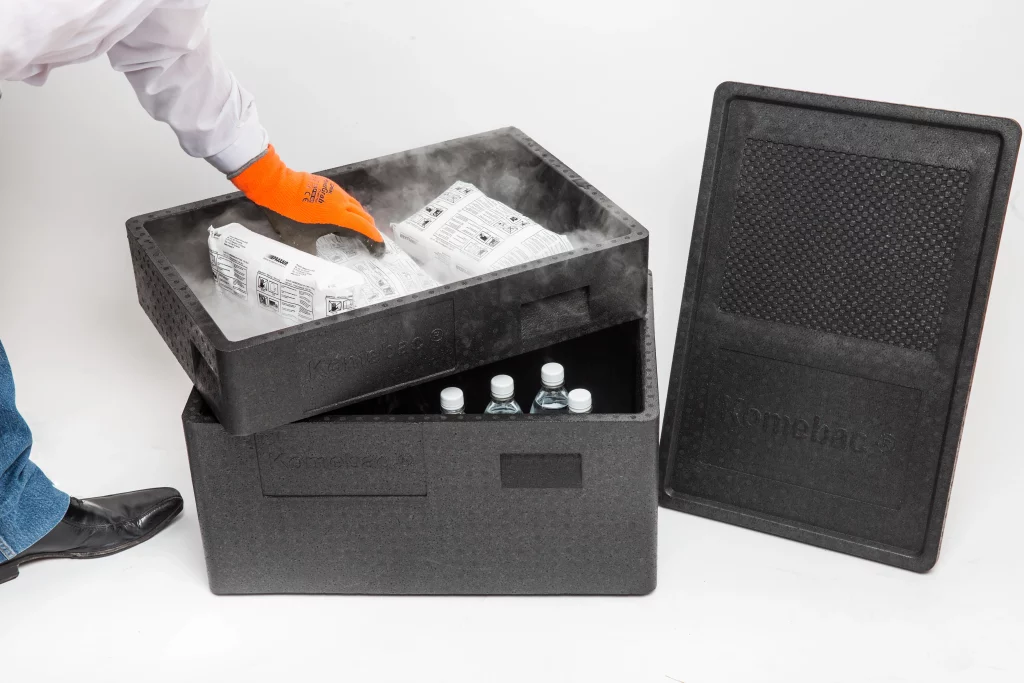
Reusable insulated crates offer decisive advantages for long-distance cold logistics. Their sturdy design allows several cycles of use, amortizing the initial cost over time and reducing the volume of waste generated.
The lightness of these solutions, combined with their insulating capacity, contribute to optimizing the performance/weight ratio, which is particularly critical for air freight. These solutions are part of a CSR approach, subject to an assessment of their environmental impact in the context in question. End-of-life recycling in dedicated channels completes the packaging life cycle.
The advantage of long-distance materials like EPP/EPS
Expanded polystyrene (EPS) and expanded polypropylene (EPP) offer excellent properties for temperature-controlled transport. Their honeycomb structure gives them excellent thermal insulation capacity, while keeping weight to a minimum.
These materials are perfectly able to withstand marine conditions (humidity, salinity) and, in the case of expanded polypropylene, the mechanical shocks of repeated handling. Their ability to be customized means that solutions can be adapted to the specific constraints of each application. Recyclable, they are part of a circular economy.
Use case: how Knauf Industries meets your cold logistics challenges?
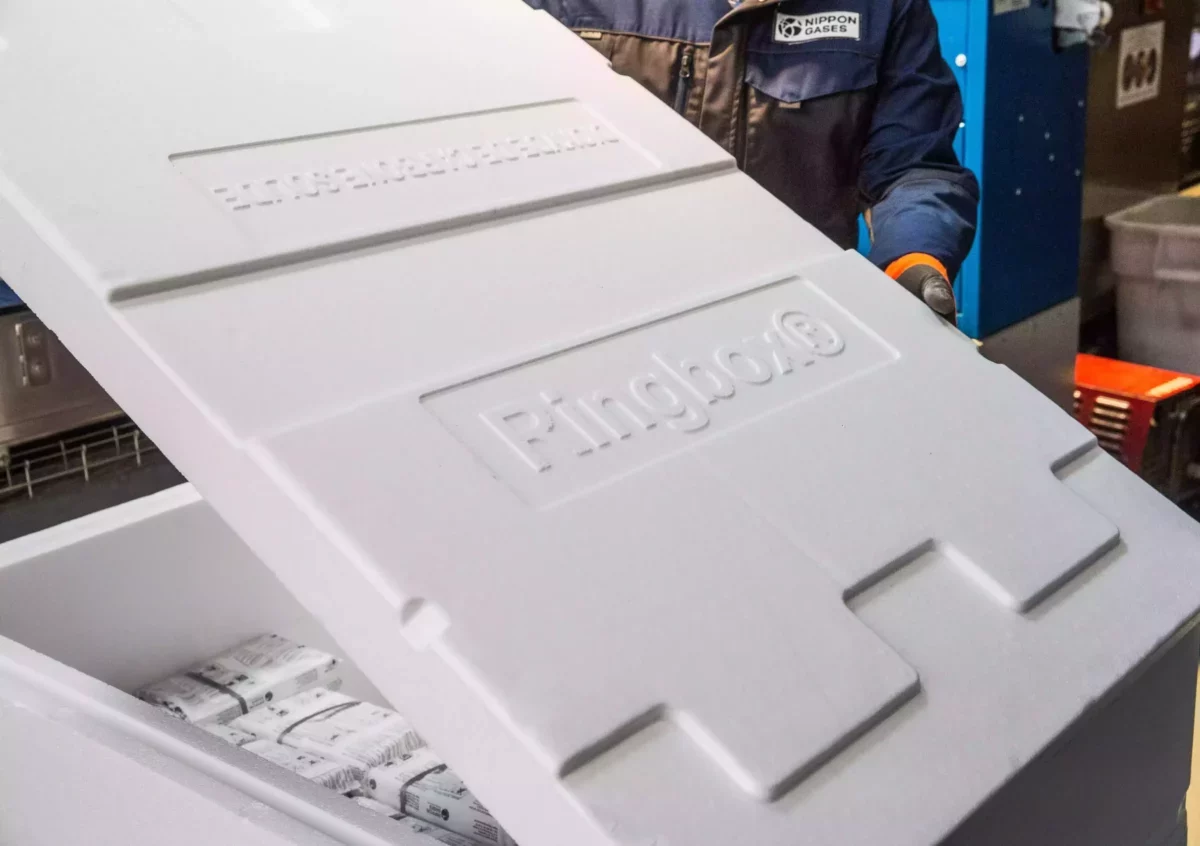
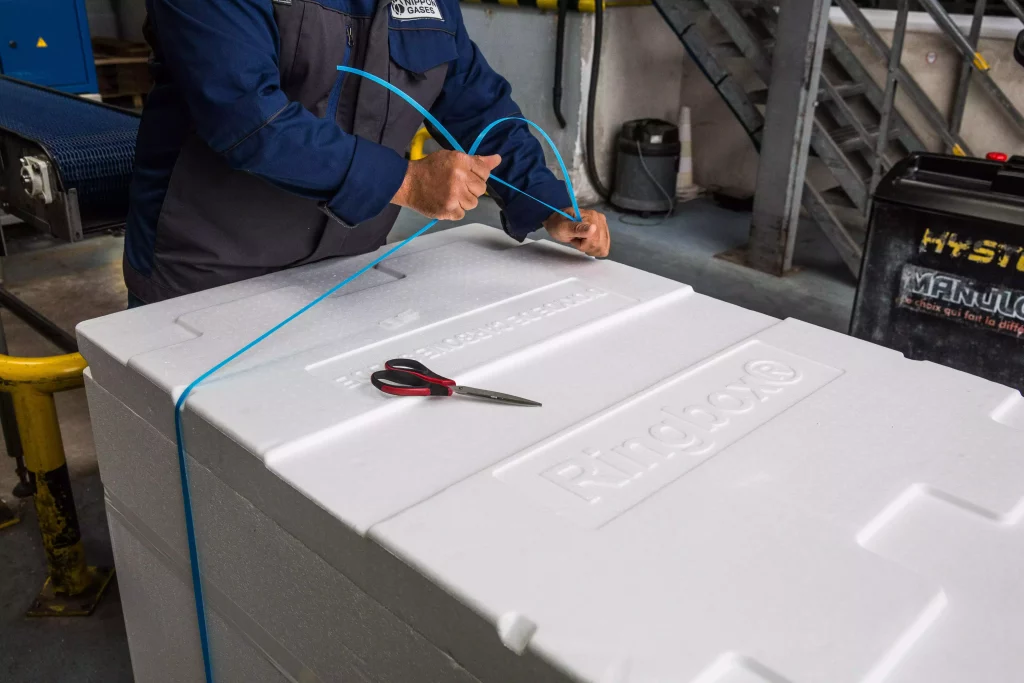
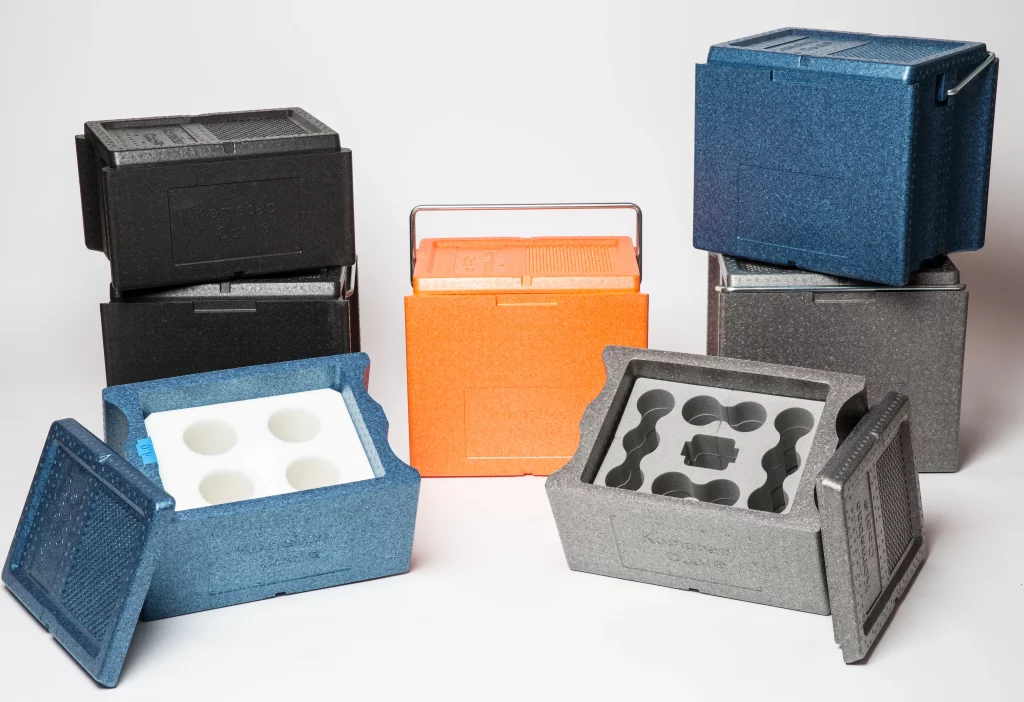
Knauf Industries develops innovative isothermal solutions, designed to meet the most stringent requirements of temperature-controlled transport. The Ringbox® is a perfect illustration of this expertise, offering modular containers adapted to both sea and air transport requirements.
Ringbox® for sea freight: durable, robust, long-lasting insulated
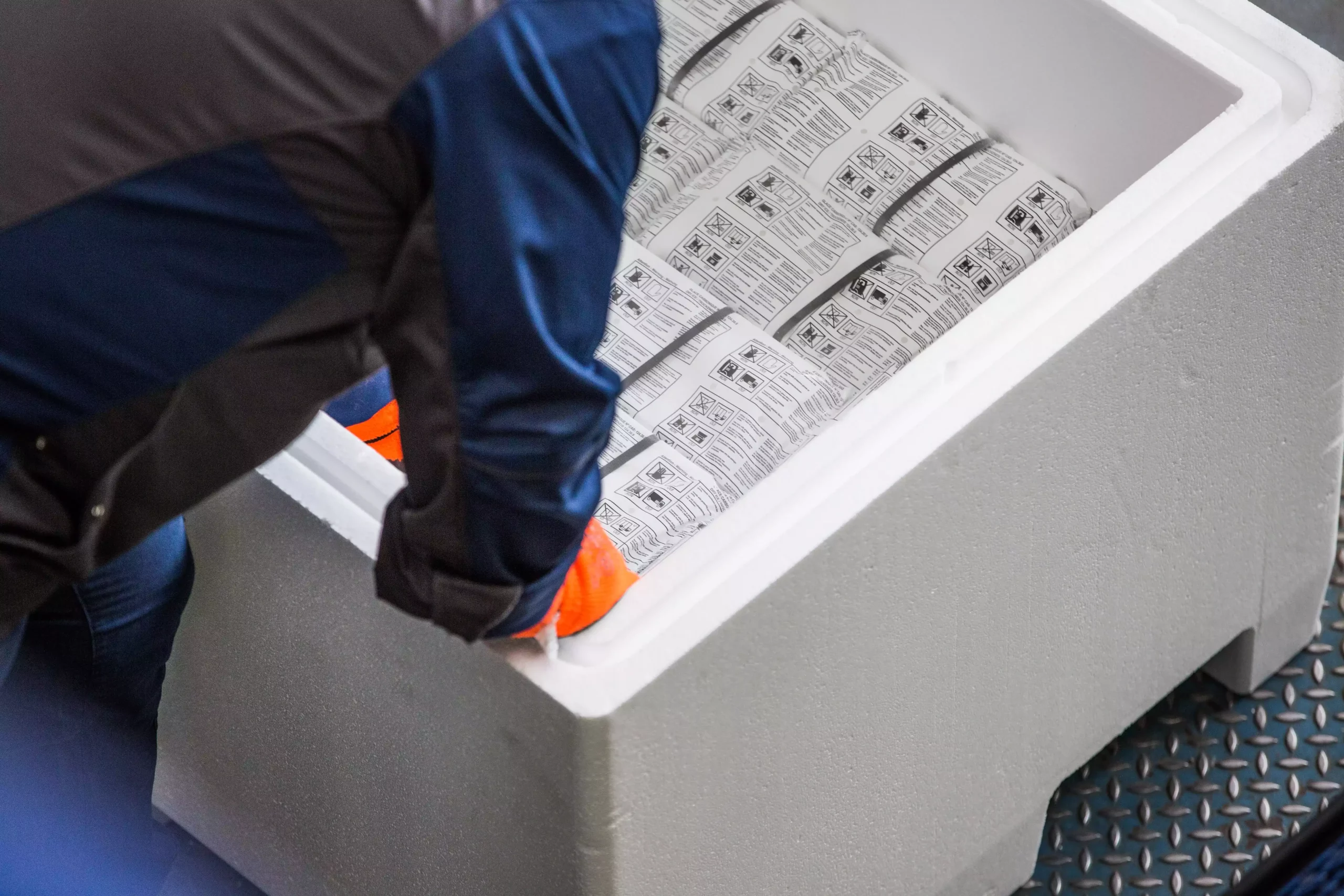
The Ringbox® is specifically designed for long-distance shipping. This modular isothermal container supports loads of up to 360 kg and maintains temperatures from -80°C to -20°C depending on configuration. Qualification to NF S 99-700 standard guarantees validated isothermal performance.
Made from expanded polystyrene, the Ringbox® withstands the most demanding marine conditions. Its modularity optimizes container filling, while its reusability (up to 3 cycles) improves the economic and environmental balance. Customizable on request, it blends perfectly with your corporate image.
Ringbox® for air freight: light, fast, efficient
For air transport, Knauf Industries offers weight-optimized versions that meet the specific constraints of express freight. The excellent thermal capacity of EPS makes it possible to optimize wall thickness while maintaining the required performance, offering a particularly favorable insulation-to-weight ratio.
The speed of air transport demands immediately operational solutions. Knauf Industries ranges are designed for fast, easy deployment, compatible with the accelerated procedures of airport hubs.
How do you set up successful long-distance cold logistics?
Custom-built sea and air freight containers to suit your requirements
Knauf Industries’ support goes beyond the supply of standard products. Our teams of experts develop tailor-made solutions and are involved right from the design phase, analyzing your flows, producing customized prototypes and validating performance through rigorous testing. This partnership approach guarantees solutions perfectly adapted to your operational constraints.
The success of long-distance cold logistics depends on a methodical approach. Start with a complete audit of your flows: type of products, required temperature ranges, transit times, regulatory constraints. This mapping helps identify critical points and optimization margins.
Your choice of packaging partner is crucial. Choose an expert capable of supporting you in the design, prototyping and validation of tailor-made solutions. Calculating the CO₂ footprint of your supply chain enables you to measure the environmental gains of different options.
Real-life tests validate the robustness of the solutions selected. Continuous temperature monitoring, thanks to IoT technologies, guarantees the traceability required by regulations and reassures your customers. Finally, the organization of reuse cycles optimizes the return on your packaging investment.
Conclusion: long-distance refrigeration under control
Long-distance cold logistics is much more than an operational constraint: it’s a competitive lever for companies that know how to seize it. In the face of growing demands for quality, durability and traceability, isothermal packaging plays a central strategic role. Knauf Industries supports you in this transformation, with solutions like the Ringbox® designed to meet the challenges of maritime and air transport. The expertise of our teams, combined with high-performance materials and a circular approach, makes every project an opportunity for progress. Ready to optimize your long-distance cold flows? Contact our Knauf Industries experts for a personalized study of your needs.