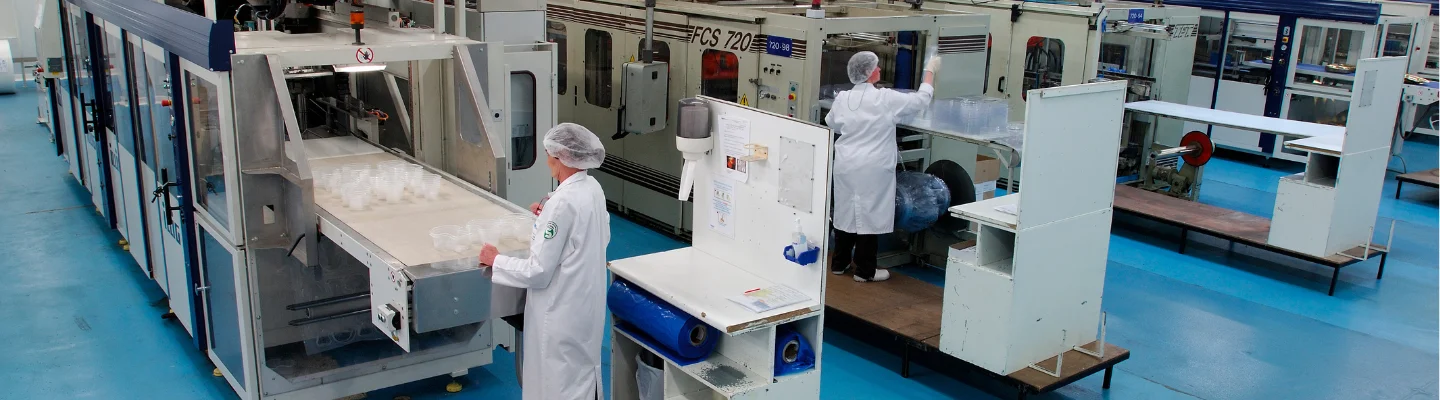

What is plastic thermoforming?
Definition of thermoforming: Plastic transformation process that consists in heating a thermoplastic sheet or film until it softens, then shaping it in a mold before cooling it to retain its geometry.
Thermoforming is a plastic processing technique used to produce lightweight, robust parts perfectly suited to the needs of professional users. The principle is based on heating the plastic material, which becomes soft and malleable, and then shaping it (called forming) in a mold corresponding to the final part. The thermoforming process is particularly for packaging.
At Knauf Industries, plastic thermoforming is primarily intended for food industry professionals who require high-performance, reliable and recyclable containers. Thanks to our proven technical know-how and specialized equipment, our teams accompany manufacturers from the study of their needs right through to mass production of their thermoformed plastic parts.
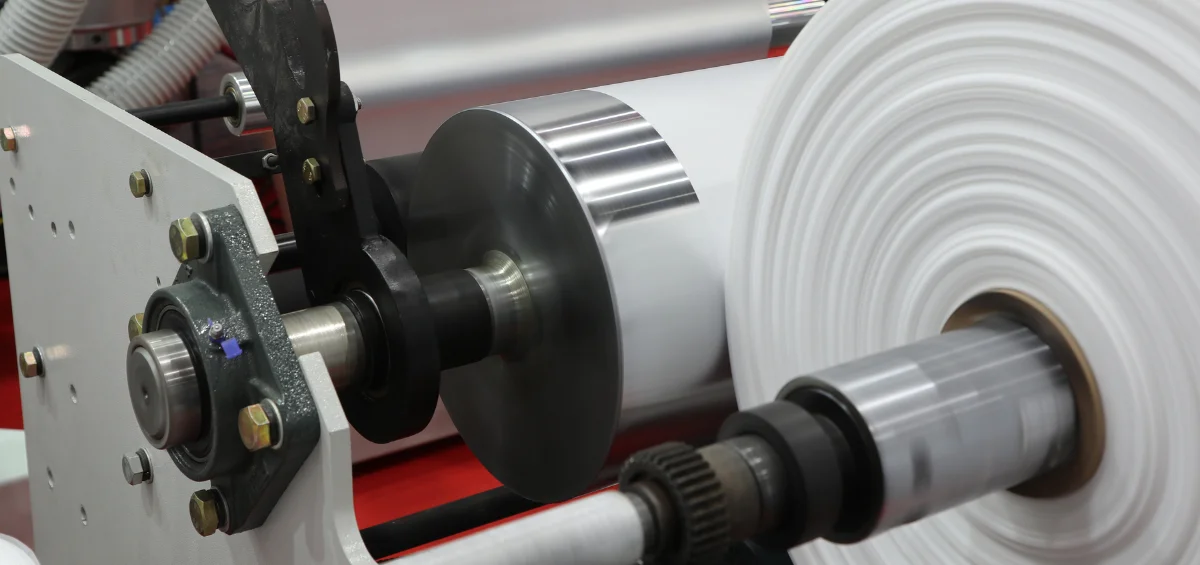
How does thermoforming work?
Thermoforming is an industrial process used to mass-produce plastic parts. It is based on the transformation of a heated thermoplastic sheet, then its shaping in a mold before cooling. As we are committed to adapting to the needs of each company, we can offer you customizable thermoformed parts in format, wall thickness material or even mechanical strength.
In practice, the process consists of several stages:
- Preparation: a plastic film or sheet is positioned in the thermoforming machine.
- Heating: the material is heated for a few seconds, softening it sufficiently to become supple and malleable.
- Shaping: the softened sheet is pressed against a mold by vacuum, pressure or mechanical assistance to take the desired shape.
- Cooling and demolding: the part cools, stiffens and is then demolded before cutting and finishing operations.
This process enables rapid production of parts with excellent repeatability. From part design to thermoforming and mass production, our teams are with you every step of the way. A true industrial partnerKnauf Industries is able to manufacture large series with optimum part reliability.
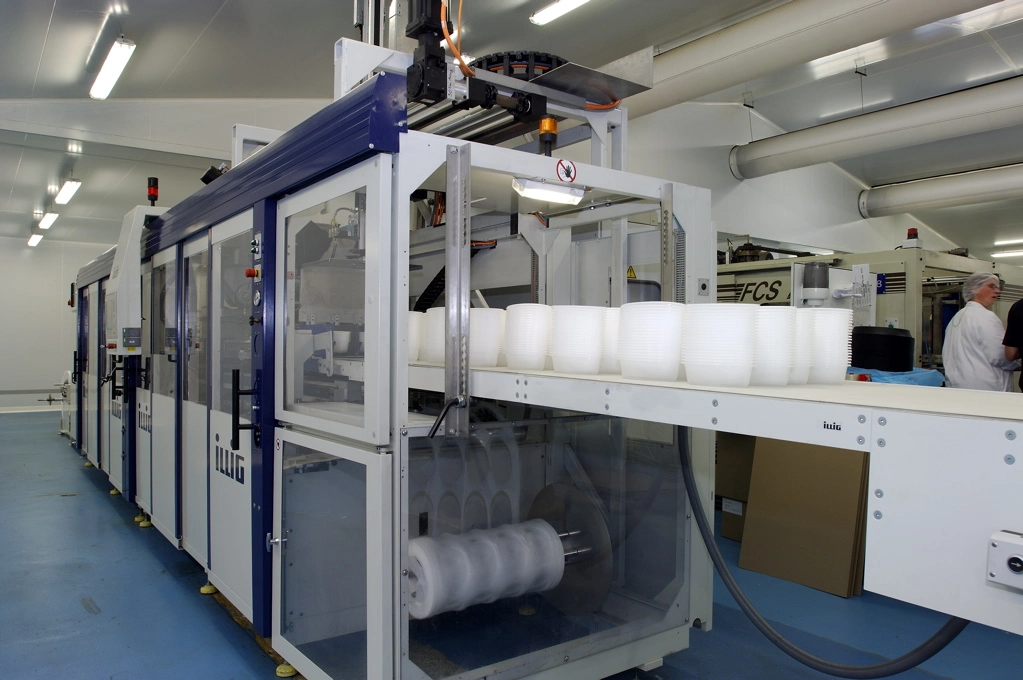
The advantages of plastic thermoforming for the production of your parts
Thanks to its high-performance machinery and recognized expertise, Knauf Industries has mastered the art of plastic thermoforming. And over the years, we have been able to exploit the full potential of this process, which offers many advantages:
- Economical processThis process is particularly well-suited to medium and large production runs, thanks to molds that are less costly than those used for plastic injection molding.
- High production speeds for short lead-times and high reactivity.
- High design flexibilityPerfect for rapid prototyping and design adjustments.
- Manufacture of lightweight, robust partssuitable for a wide range of industrial and food applications.
- Optimized waste management with direct reintegration of scrap materials into production.
- Consistent quality and repeatability of parts produced.
At Knauf Industries, thermoforming is mainly used in the following sectors food industry. But if you have a specific need in your industry and would like to evaluate the possibility of using this technology, please do not hesitate to contact us.
Our teams will be able to evaluate your project in its entirety and and guide you towards the right manufacturing processwhether thermoforming, plastic injection or cellular molding. Experts in the field of plastic parts manufacturing, we are able to use many different processes to meet the specific needs of each of our customers.
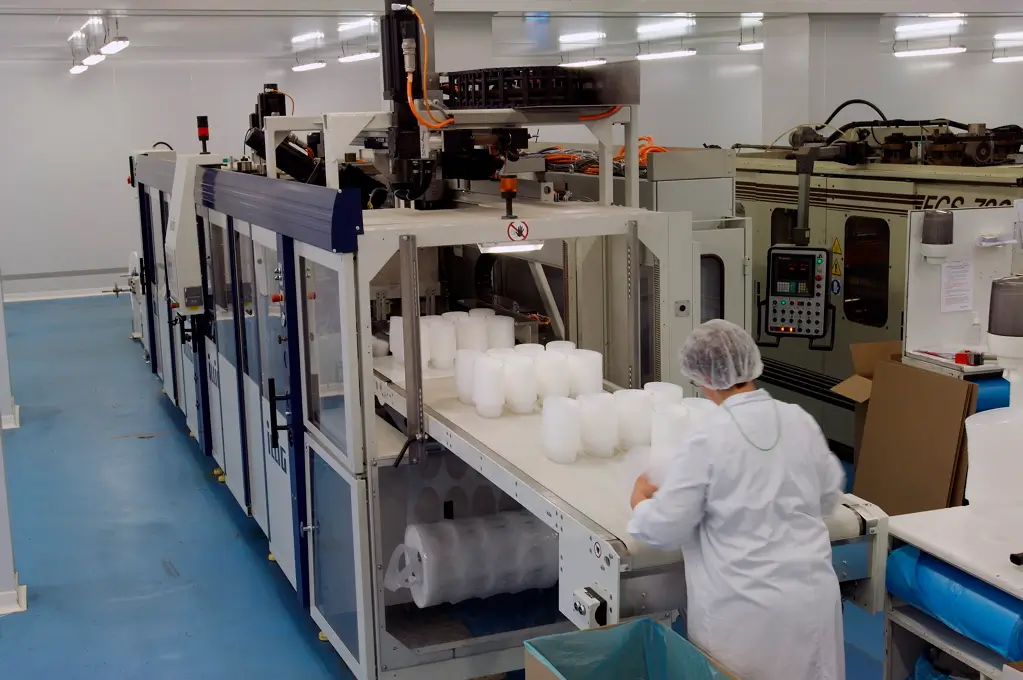
Knauf Industries meets all your thermoforming needs
You are looking for a plastic thermoforming company in France to design and mass produce your parts? Knauf Industries puts its know-how, modern production lines and a team specialized in food processing applications at your disposal.
Thanks to our France-based thermoforming specialized in thermoforming and our 9 production lineswe are able to produce millions of parts every year, with consistent quality and quality and perfect process control. We support our customers from needs analysis through to industrialization, offering both standard and customized solutions.
At our plant in La-Bernerie-en-Retz (Loire-Atlantique, France), no fewer than 50 employees thermoform your parts all year round with the utmost care and rigorous execution. Committed to an HACCP (Hazard Analysis Critical Control Points) to guarantee product safety, our site is also BRC-GS certified.
We also have complementary expertise in extrusion to manufacture all your food packaging needs, whether you're looking for transparent transparent or customized solutions, frozen or microwaveablefor protection or presentation.

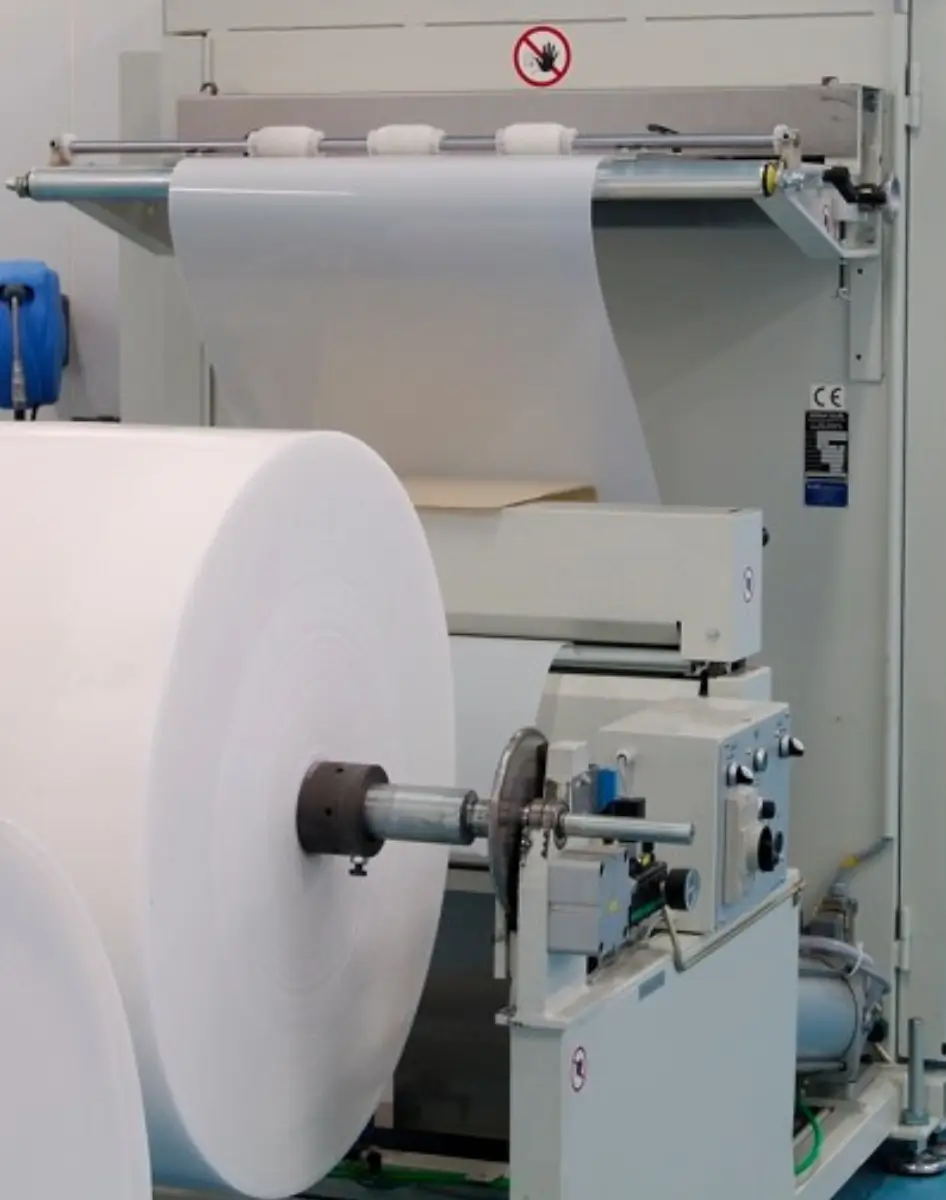
The materials used by Knauf Industrie
In order to guarantee high technical and environmental performance, Knauf Industries selects plastic materials plastics adapted to the requirements of thermoforming and and food processing applications.
- PP (polypropylene) : versatile material, resistant to impact, chemicals and temperature variations. Microwavable and recyclablePP is ideal for food trays. Parts can be made using our KAPseal®, KAPclear® and Kaplight® materials. carbon black-free (detectable in sorting centers). All these materials are extruded in-house.
- R'KAP® : material made from post-consumer recycled plastic waste, using the mass balance process.
- PET (polyethylene terephthalate): Highly transparent and impact-resistant, this material is ideal for food applications. It is commonly used to produce containers and products for the food industry (such as cookie tins).
- R-PET (recycled PET): solution derived from recycled materials, which maintains high performance while meeting sustainability challenges.
Polypropylene remains the most widely used material for thermoforming food trays, thanks to its mechanical and thermal properties, and its high recyclability. Notable advantages include high resistance to wearhigh lightweight adapted to the packaging world high thermal stability as well as flexibility of design and customization.

Plastic thermoforming applications
Plastic thermoforming is a method for producing a wide range of packaging a wide range of packaging, mainly for the food industry.. Need concrete examples? Here are just a few of Knauf Industries' current thermoforming applications:
- Food trays: lightweight, durable solutions for packaging meat, fish, ready meals, fruit, vegetables or delicatessen products.
- Lids : elements ensuring hermetic closure and optimum product protection.
- Protective and transport packaging: parts designed to secure products during logistics and distribution.
- Blister packs : to complete and protect product packaging.
- Special packaging : solutions adapted to frozen, microwaveable or protective atmosphere products.
This process makes it possible to design standard or entirely customized packagingaccording to the technical and marketing constraints of each project. Do you need help creating the ideal piece to enhance your product's shelf appeal, while at the same time offering specific technical features? Don't hesitate to contact us. Thanks to our mastery of plastic transformation techniques, we can help you design and manufacture even the most complex packaging.
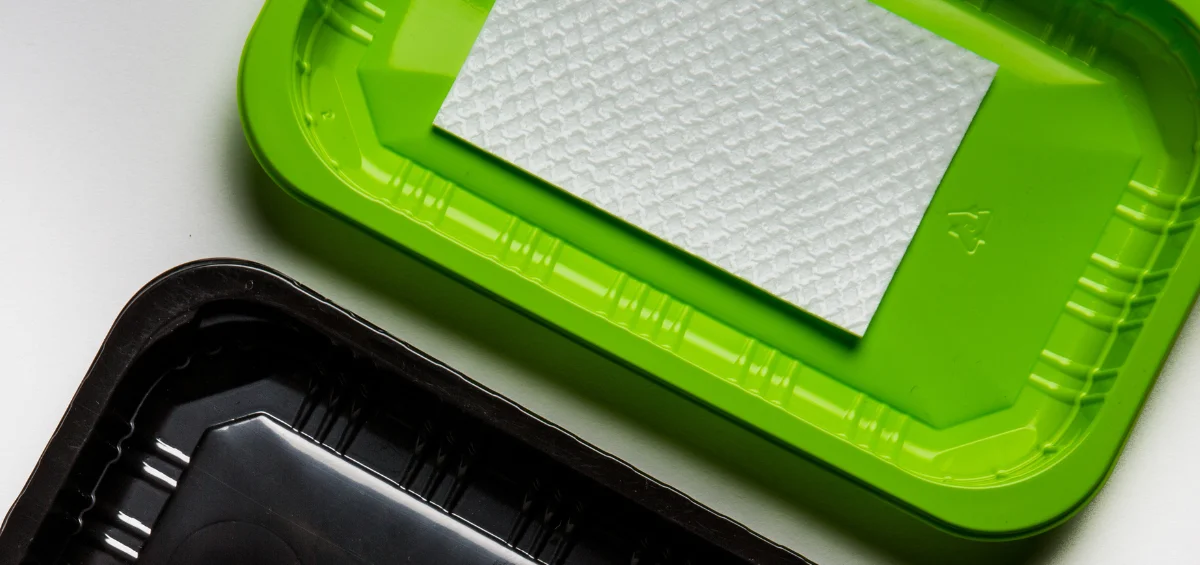
Blotting, the "little extra" that makes all the difference
You want to to preserve the freshness and quality of your food (meat, fish, fruit and vegetables...)? The blotting paper is the answer. This solution enhances food safety by containing medium and heavy exudates from fatty, moist, aqueous and acidic products. As an added bonus, blotting with a product-specific blotting pad enhances the aesthetic appeal of its presentation.
Why trust us?
 An actor...
...recognized in the field of thermoforming and plastics processing.
 Equipment...
...modern, high-performance production lines.
 A capacity...
...to produce large series with consistent quality.
 Respect...
... production deadlines and logistical constraints.