
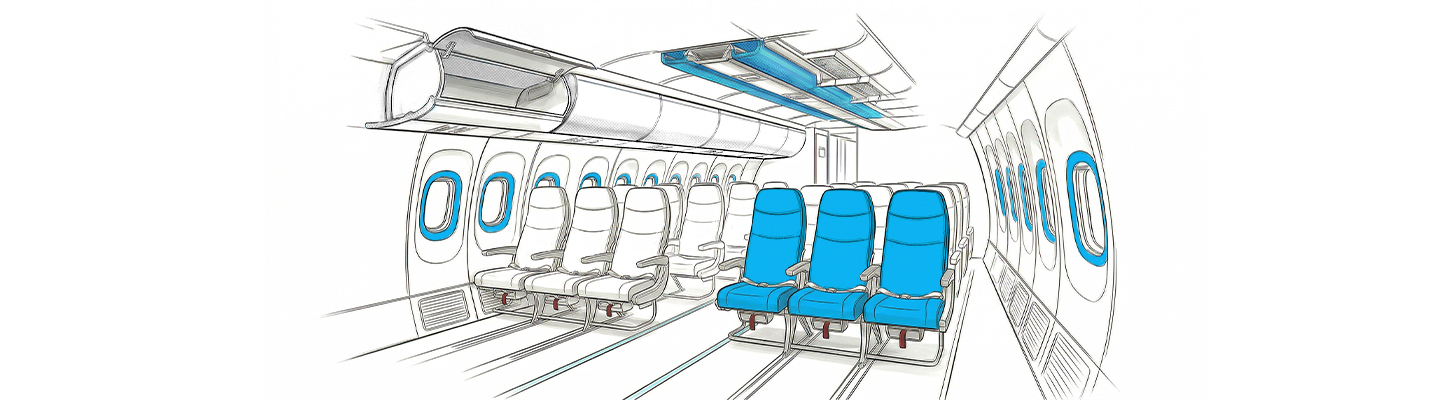
Custom plastic solutions for aircraft interiors
Aircraft interiors require components that combine low weight, robustness and design flexibility. From seating systems to cabin equipment and HVAC-related applications, every part must fit precisely within a demanding technical environment while supporting reliable industrial production.
Knauf Industries helps manufacturers develop custom technical parts for non-structural cabin applications. Our solutions are designed for projects where lightweighting, dimensional consistency, durability and functional performance all matter.
By combining the right material with the right process, we help industrial teams create aircraft interior components adapted to their design constraints and production goals.
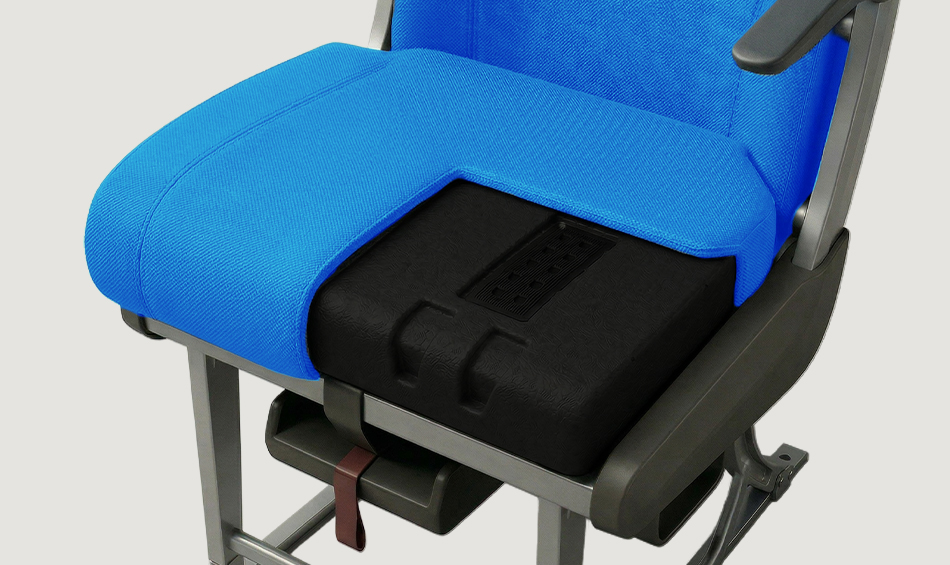
Components for aircraft seating systems
Aircraft seating is one of the most relevant applications for lightweight technical materials. Seating-related components must contribute to weight reduction while maintaining precision, robustness and repeatability.
Knauf Industries develops custom parts for seat systems and related interior assemblies, including shaped cores, support elements and technical components designed for complex geometries. Depending on the project, this may include applications connected to armrests, headrests, cushion support structures and other seating-related functions. In this area our overmolding technology delivers additional benefits combining different materials like foam and metal or plastic inserts into one part. Our industrial teams master this technology offering a unique know-how supporting demanding aviation designs.
Our approach helps manufacturers balance lightweight design with industrial feasibility, ensuring that each component supports both performance and production efficiency.
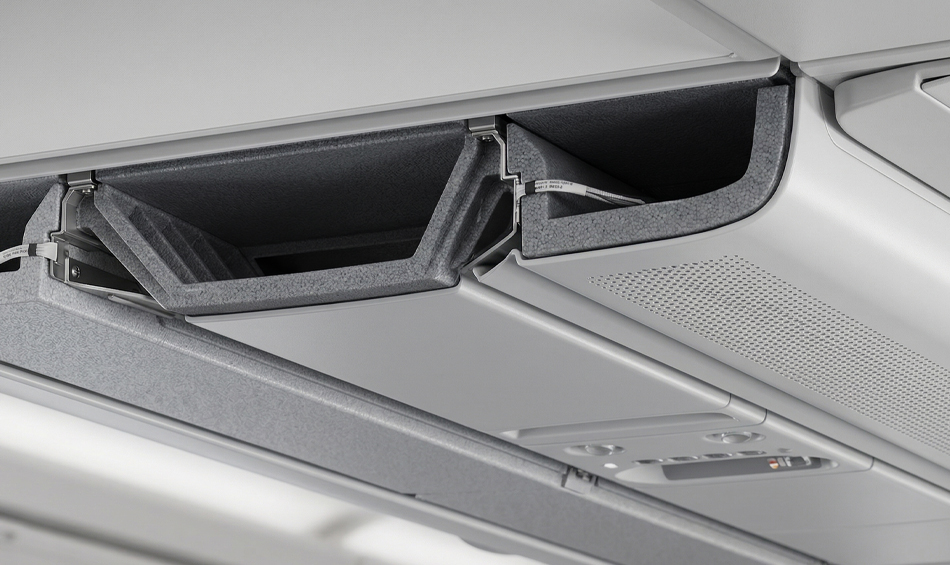
HVAC and air distribution components
Weight reduction and thermal performance are also important in aircraft HVAC and air management systems. These applications call for components that can support system efficiency while remaining lightweight, dimensionally consistent and adapted to complex integration requirements.
Knauf Industries develops custom technical parts for HVAC-related uses, including lightweight ducts, insulating elements and air distribution components. Our solutions are designed to help manufacturers optimize part geometry and functionality while maintaining industrial repeatability.
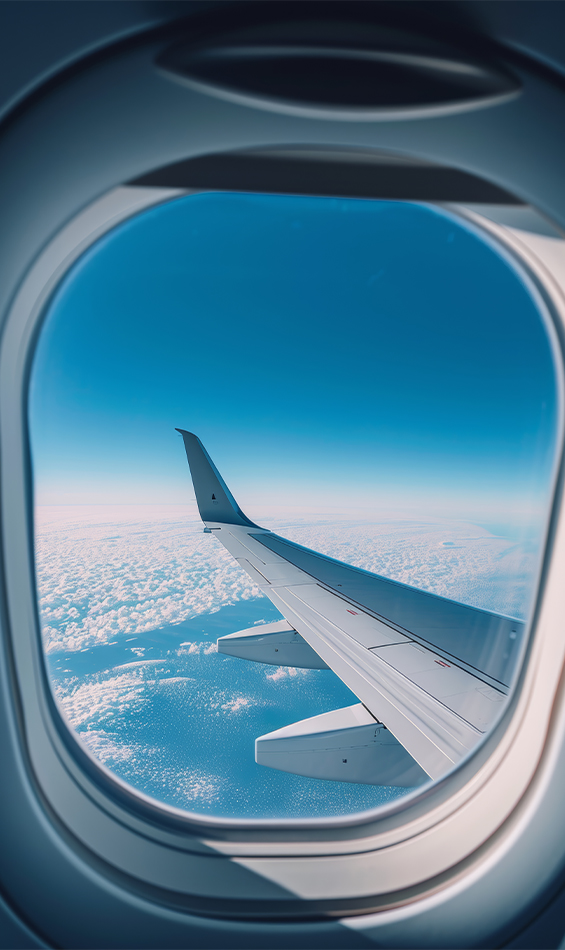
Cabin equipment and interior integration parts
Beyond seating and HVAC systems, Knauf Industries supports a broader range of aircraft interior applications where low weight and functional reliability are key. These may include technical parts used in cabin equipment and integrated interior assemblies.
Our processing capabilities make it possible to develop customized shapes and application-specific components adapted to assembly constraints, functional objectives and production volumes. The result is a more tailored solution for manufacturers looking to improve interior system performance while keeping components efficient to produce.
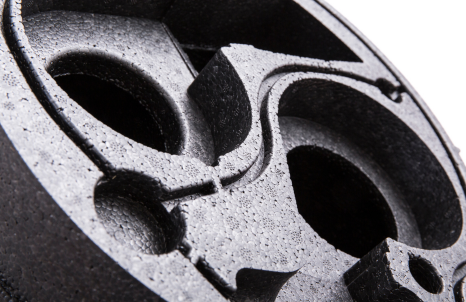
Why choose EPP and technical plastics for aircraft interior components?
Choosing the right material is a critical step in aircraft interior design. Knauf Industries draws on expertise in EPP and other technical plastics to develop components that combine low weight with durability and reliable functional performance.
EPP is especially relevant for applications where manufacturers want to reduce weight while benefiting from properties such as energy absorption, long-term resistance and, depending on the use case, thermal or acoustic insulation. Combined with our expertise in foam molding and injection molding this enables us to create solutions aligned with both technical and industrial objectives.
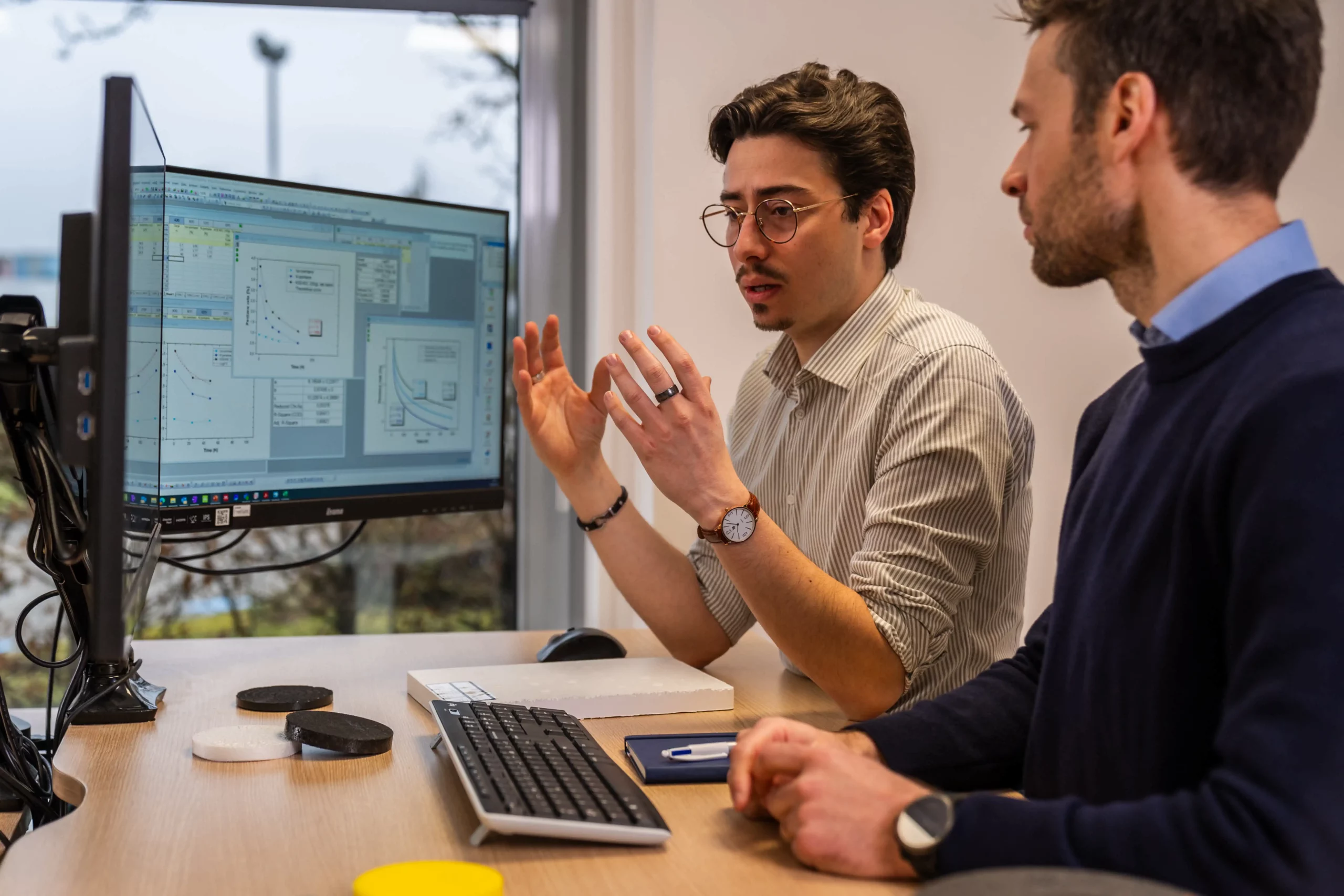
From design to production: co-developing cabin components
Aircraft interior programs require more than a component supplier. They require a partner capable of understanding the application, contributing to design optimization and supporting industrialization at scale.
Knauf Industries works with manufacturers from early design discussions through to production, helping define the right material, geometry and processing strategy for each component. Our goal is to support the development of aircraft interior parts that are technically relevant, commercially viable and ready for efficient manufacturing.
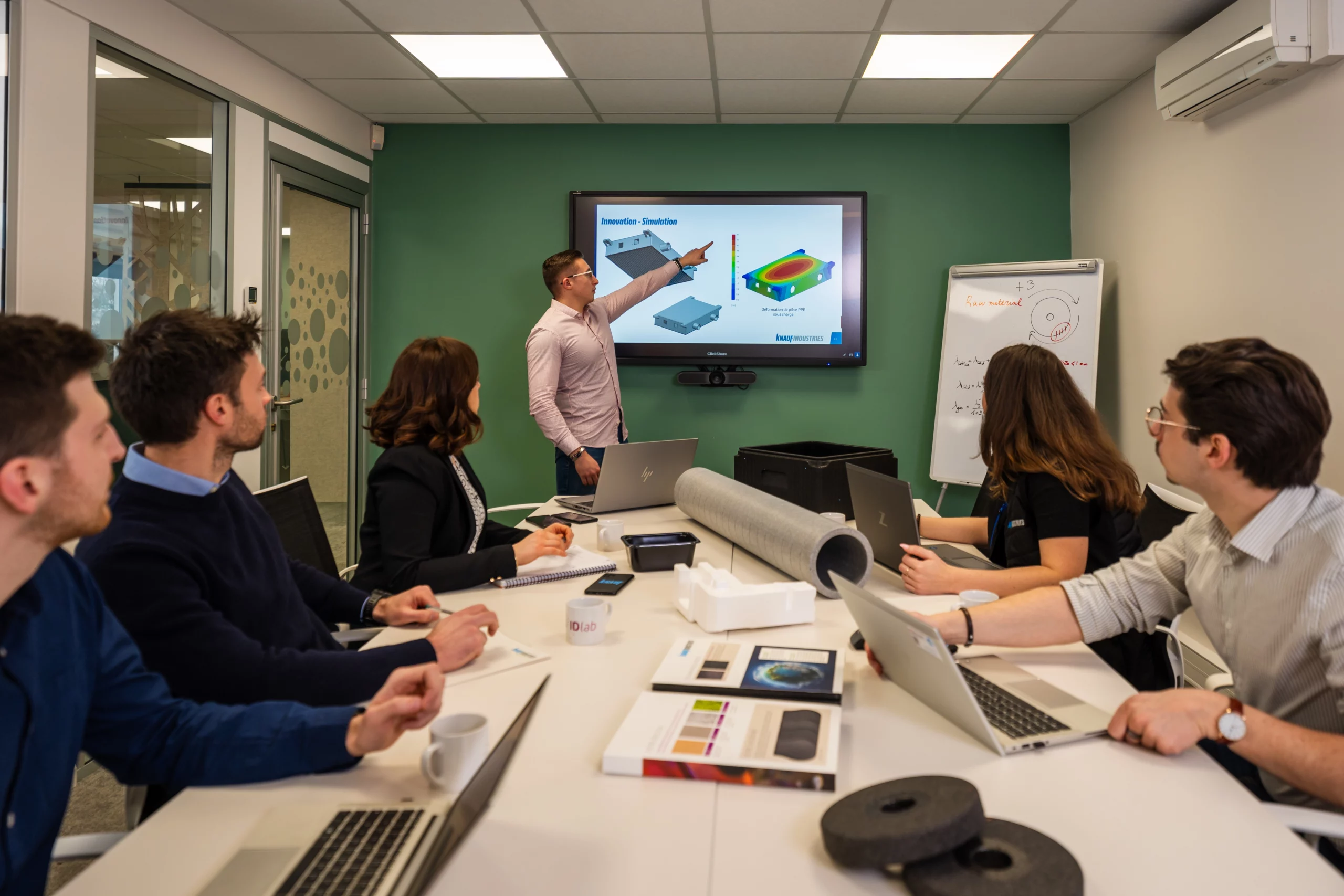
Why partner with Knauf Industries ?
- Expertise in lightweight technical plastic solutions
- Strong know-how in EPP and plastics processing
- Custom development for demanding industrial applications
- Support from design optimization to production
- Focus on durability, manufacturability and performance
- Commitment to lightweighting and sustainability objectives
Whether you are developing components for seating systems, HVAC applications or other cabin equipment, Knauf Industries helps transform technical requirements into production-ready solutions.