- Agri-food
- Household appliances & HVAC
- Innovation
- Logistics & distribution
- Pharma & health
- Product design
- Protection
Reusable packaging in 2026: 7 trends transforming the industrial sector

CONTENTS
1. A regulatory framework requiring action
2. Trend 1: system qualification, the key to industrial performance
3. Trend 2: EPP and PP take over for demanding industrial applications
4. Trend 3: digital traceability, a requirement for modern supply chains
5. Trend 4: eco-design integrated into process constraints
6. Trend 5: Standardization accelerates multi-site deployments
7. Trend 6: Field testing, the recommended step before deployment
8. Trend 7: BtoB re-use, a priority deployment area
9. Knauf Industries: your partner in the transition to reusable packaging
- Support from A to Z to create your recycling loop
- An R&D center dedicated to qualification
- Materials tailored to your process requirements
- Knauf Circular®: the integrated circular economy
The year 2026 marks a decisive turning point for manufacturers. Between the application of the European PPWR regulation on August 12, 2026 and the roll-out of EPR (Extended Producer Responsibility) for professional packaging in France, the switch to reusable packaging is no longer an option, but a strategic lever for optimizing your logistics costs, securing your regulatory compliance and reducing the quantity of waste. What are the trends that will shape this market? How can you integrate them into your industrial processes? We take a closer look at the major developments you need to anticipate for your production lines.
Article abstract:
- Reuse becomes mandatory from 2026: the introduction in 2021 of the Climate and Resilience Law, the implementation of the PPWR regulation and the extension of the EPR for professional packaging impose quantified targets and enhanced traceability.
- The key to success is system qualification: the packaging must be validated throughout the entire industrial loop (design, manufacture, packaging, distribution, use, washing and recycling).
- For BtoB reuse, light, resistant materials such as EPP and PP are the preferred choice. They can withstand many cycles of use and cover a wide range of industries.
- Digital traceability is becoming a standard: RFID, QR codes, Bluetooth and GPS technologies can be used to count cycles, locate containers, reduce waste and control costs per use.
- A successful transition to reuse is based on an approach that needs to be initiated today, with the aim of defining standards, launching pilots in real-life conditions, and enlisting the support of specialist players like Knauf Industries to guarantee both regulatory compliance and financial viability.
A regulatory framework that requires action
In 2026, regulatory pressure on reusable packaging will reach an unprecedented level for marketers. The PPWR regulation imposes targets: 40% of reusable transport and sales packaging by 2030, 70% by 2040. For inter-site transport packaging, the target rises to 100%. For grouped packaging, the thresholds are set at 10% by 2030 and 25% by 2040.
Let’s define EPR. It’s Extended Producer Responsibility.
To date, the oldest and best-known EPR dates back to 1992, and concerns household packaging. This is the “polluter countries” principle. Producers remain responsible for their products until the end of their life cycle, and must assume the costs. EPR for professional packaging merges the catering packaging sector with that of industrial and commercial packaging .
In France, EPR for professional packaging came into force in January 2026. The 17 million tonnes of industrial and commercial packaging are now subject to the polluter-pays principle. In concrete terms: an eco-contribution to be paid, traceability obligations and eco-design incentives.
For industrial and supply chain managers, anticipating these deadlines is becoming an imperative. Compliance means mapping these flows, analyzing, quantifying and then rethinking packaging systems, from design to reverse logistics.
Trend 1: system qualification, the key to industrial performance
In 2026, reusable packaging is more than just a sturdy container that can be used over and over again. To guarantee its integration into your processes, a rigorous qualification process is essential.
To date, there is no clear regulatory definition of what constitutes a reusable container. However, here is the definition of reusable packaging according to the European PPWR regulation. Reusable packaging must meet the following criteria:
- Have been conceived, designed and marketed with a view to re-use
- Meet consumer health, safety andhygiene requirements
- Recyclable when it becomes waste
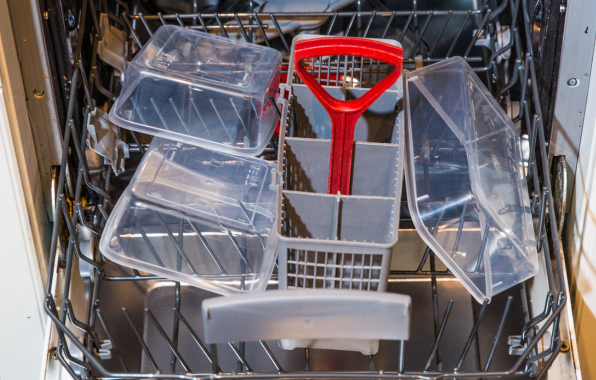
This qualification goes beyond simple product testing. It encompasses the entire system: compatibility with your packaging lines (transitique, robotization, sealing), resistance to industrial washing cycles, maintenance of barrier performance over time, and compliance with sanitary standards in various industrial sectors.
Manufacturers who make this transition successfully adopt a systemic approach. They qualify a complete loop integrating process specifications, logistical constraints (storage, stacking, handling), washing requirements and traceability. A financial and human investment upstream secures deployment and avoids unpleasant surprises in production.
Innovative packaging
Packaging 2.0, packaging, boxes...
A project, an idea?
Trend 2: EPP and PP take over for demanding industrial applications
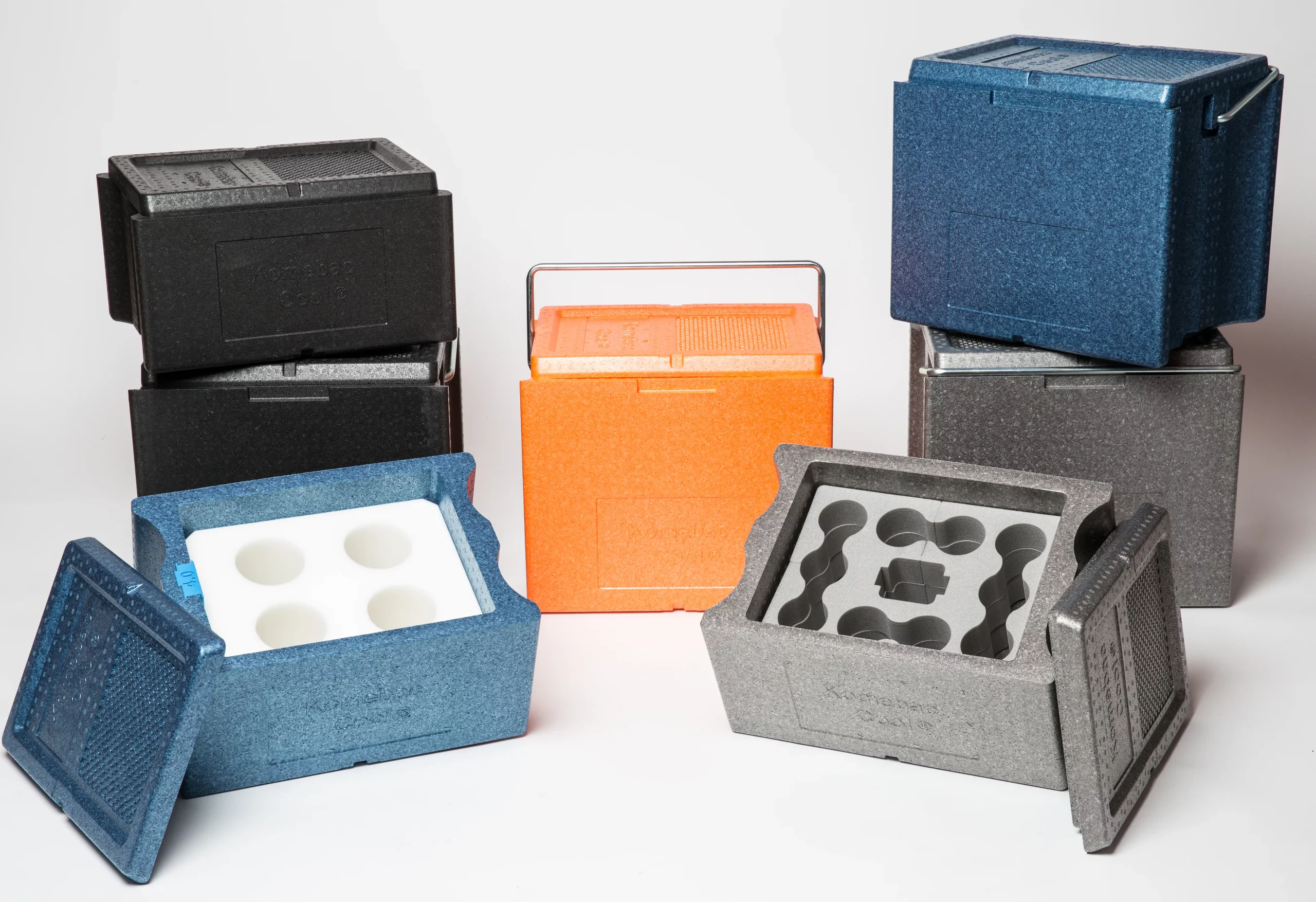
Expanded polypropylene (EPP) is emerging as the benchmark material for professional reusable packaging. This technical foam meets the requirements of industrial environments: resistance to repeated shocks, lightness, resilience, isothermal performance for the cold chain…
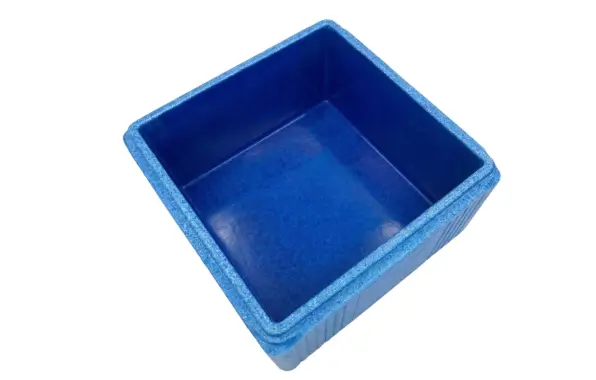
In the automotive and aeronautics industries, this material offers optimum protection for sensitive parts, with an unbeatable weight-performance ratio. EPP is also used in the agri-food sector, for the manufacture of cases with a smooth, surfaced interior to facilitate cleaning and preserve the organoleptic qualities of the product contained.
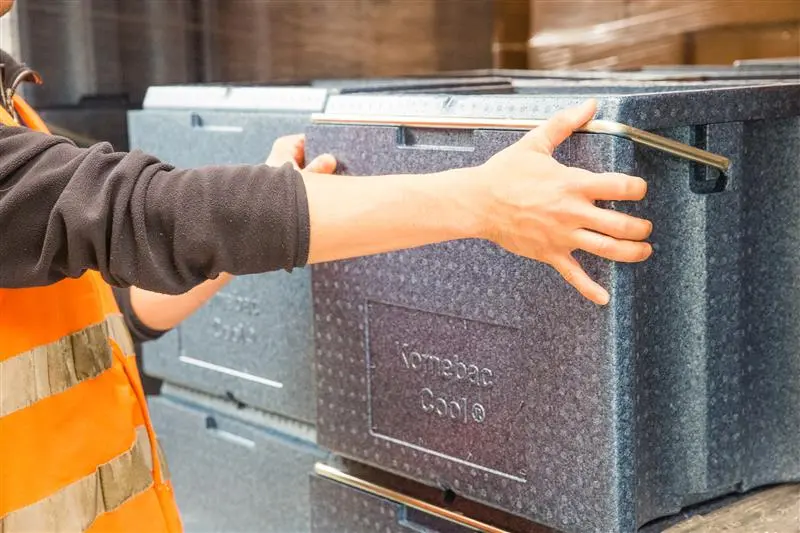
EPP can also be used to manufacture ergonomic solutions for your teams.
In fact, reusable packaging in lightweight materials such as EPP reduces musculoskeletal disorders among operators, an issue closely monitored by HSE departments and CSSCTs.
In addition to EPP, polypropylene (PP) is also available. Rigid, durable and sanitary-compliant, it offers excellent chemical and mechanical resistance. PP is particularly suited to the design of boxes and trays.
Trend 3: Digital traceability, a requirement for modern supply chains
2026’s reusable packaging is intelligent. The integration of traceability technologies (RFID, QR codes, laser engraving, Bluetooth, GPS, etc.) enables each container to be tracked throughout its lifecycle, and helps guarantee a high rate of return and capture of packaging for the various logistics flows.
For quality departments, traceability provides an operational history: location of packaging, status at each stage of the cycle, results of quality checks and any incidents. It facilitates audits and meets the growing demands of clients for transparency in the supply chain.
For logistics departments, this data enables them to optimize fleet management: identifying points of loss, planning renewals and, above all, calculating the real TCO* per container. An asset for monitoring system profitability.
*TCO (Total Cost of Ownership): the sum of all costs related to an asset over its entire life cycle.
Trend 4: eco-design integrated into process constraints
Designing reusable packaging for industry requires integrating your line constraints from the outset. During the design phase, our engineering department can go on site with a production line scanning system to map equipment and precisely identify process constraints. We then use digital simulation to validate concepts before prototyping. Analysis of stacking resistance, compression behavior, thermal shock resistance, etc.
The design incorporates the specific features of each process: reinforced zones for robotic gripping, optimized stackability for reverse logistics, retention-free surfaces for tunnel washing, labeling windows or engraving zones for identification.
This approach generates stronger, lighter packaging by optimizing thicknesses. Coupled with a Life Cycle Assessment (LCA), it enables you to document environmental gains compared to single-use for the same molding technology, and to feed your CSR reporting.

Trend 5: Standardization accelerates multi-site deployments
In 2026, the trend in reusable packaging will be towards standardization to facilitate inter-site flows and the pooling of resources between partners.
Standard formats are emerging, compatible with current palletizing and washing equipment on the market. Shared wash centers are on the increase, giving small and medium-sized businesses access to professional infrastructures without heavy investment.
For multi-site groups, this standardization simplifies fleet management and facilitates exchanges between plants. A lever for operational efficiency that accelerates return on investment.
Trend 6: Field testing, the recommended step before deployment
Feedback is unanimous: the transition to reuse cannot be improvised. Successful manufacturers invest in rigorous pilot phases prior to large-scale deployment. These experiments, lasting from a few weeks to several months, enable the concept to be tested in the field, by assessing the actual return rate, washing performance in real-life conditions, acceptance by operators and integration into existing flows.
KPIs to monitor: breakage rate, average number of rotations per container per month or per week, rotation time, non-conformity rate at incoming inspection, cost and carbon footprint per cycle. These metrics objectify the gains and enable the system to be fine-tuned before being rolled out across the board.
Trend 7: BtoB re-use, a priority deployment area
While reuse for the general public is making headlines, it’s in the BtoB sector that progress is most tangible and easiest to implement. Professional flows offer ideal conditions: predictable volumes, identified players and controllable, already existing closed loops.
Reusable pallet boxes, totes and insulated containers are becoming increasingly popular in the food, automotive, pharmaceutical and industrial logistics sectors. The benefits are measurable: reduced packaging waste, lower CTO, improved image with clients committed to CSR initiatives. By 2030, 40% of transport and sales packaging should be reusable. An ambitious goal, but one that can be achieved by companies that begin the transition now.
Knauf Industries: your partner for a successful transition to reusable packaging
Knauf Industries specializes in technical parts and packaging made by cellular molding, injection molding and thermoforming, and supports manufacturers in the food, automotive and logistics industries in the design and deployment of high-performance, reusable packaging solutions.
Support from A to Z to create your recycling loop
Our approach is based on a proven 3-step methodology:
- Audit, exploration and specifications
- Co-development and eco-design
- Industrialization, life cycle and continuous improvement
An R&D center dedicated to qualification
Our teams mobilize digital simulation tools, a characterization laboratory and prototyping resources (machining, 3D printing and prototypes) to validate your concepts before industrialization. Mechanical, thermal, chemical and migration tests: we document the performance of your packaging throughout its entire life cycle.
Materials tailored to your process requirements
We select materials according to your constraints of use, production, washing and end-of-life recyclability.
Knauf Circular®: the integrated circular economy
Our Knauf Circular® program ensures the collection, recycling and recovery of expanded foam at the end of its life. Because reusable packaging must also be recyclable when it becomes waste, in line with the requirements of the PPWR regulation.
Conclusion
Are you preparing your transition to the reusable packaging of 2026 and beyond? Let’s discuss your challenges and find out how Knauf Industries can secure your project, from design to field testing.
Other articles that may interest you
Link to Blog-
 Read more Read more
- Agri-food
- Household appliances & HVAC
- Innovation
- Logistics & distribution
- Pharma & health
- Product design
- Protection
Protection solutions for professional equipment
Knauf Industries offers reusable personal protection solutions for professional equipment. -
 Read more Read more
Long-distance cold logistics: the keys to successful transport
Shipping temperature-sensitive products to the other side of the world is like working against the clock and the elements. Several… -
 Read more Read more
Custom food packaging: which solution for your products?
Before buying a product, customers see the packaging. It's the shape of the container, its color and all its customization…
Need more information?
Contact our team of experts