Temperature-controlled cosmetics logistics: 15-25°C, lightweight packaging, zero breakage

CONTENTS
1. Why do cosmetics logistics require a customized approach?
Maintaining 15-25°C: a must for sensitive formulas
Breakage, MSD and formats: concrete challenges for totes and inserts
Hygiene, personalization and circularity: new standards for conscious brands
2. Technical solutions for successful cosmetics logistics
Lightweight, modular packaging: optimizing handling and flows
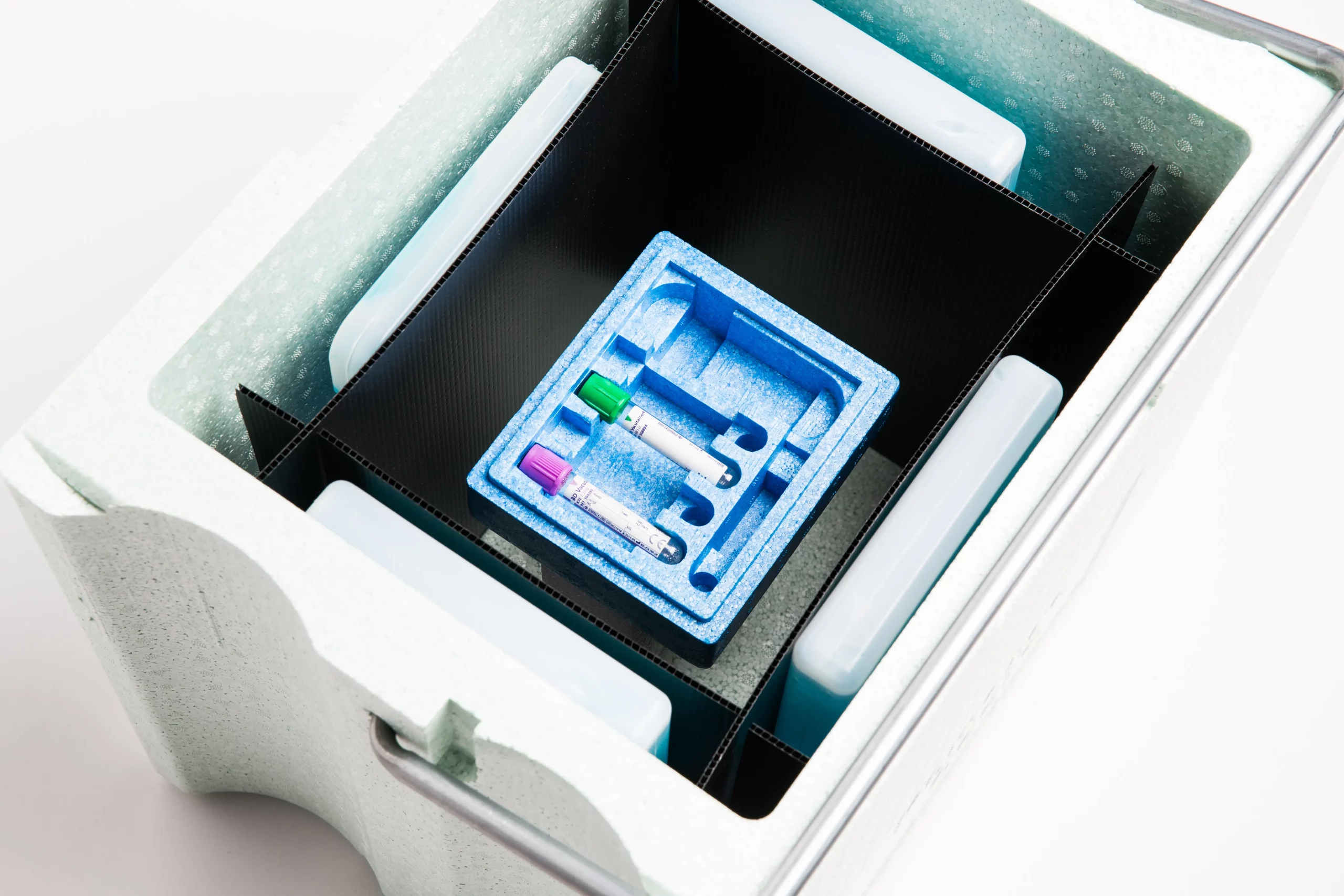
Isothermal and goods protection: packaging for 15-25°C
Personalization and reuse: enhancing brand and environmental value
3. How to set up a high-performance cosmetics supply chain?
Flow diagnosis and evaluation criteria
Selection of appropriate packaging solutions and materials
4. Knauf Industries the solution for your innovative cosmetics packaging
Isothermal and hygienic solutions for sensitive products
Materials and design expertise for lightweight, high-performance packaging
Comprehensive support: from concept to production and reuse
Article abstract:
- Thermal requirements 15-25°C To preserve the active ingredients, textures, fragrances and stability of cosmetic formulas, avoiding degradation, emulsion breakdown or crystallization during transport and storage.
- Sea and air freight constraints: for maritime operations, transit times of 2 to 6 weeks, humidity, salinity and handling breaks; for airborne operations, strict weight limits, high costs per kilogram and rapid thermal shocks.
- Zero breakage & MSD: protect glass bottles, pumps and decorated packaging while reducing MSD, the leading cause of occupational illness, with strong, lightweight, ergonomic bins.
- EPP/EPS solutions solutions: lightweight, resistant, isothermal containers (depending on configuration and qualification, hold times of up to 72 h in Controlled Room Temperature 15-25°C can be achieved), nestable and stackable, limiting breakage, warehouse noise and logistics costs.
- Hygiene, personalization, circularity Hygiene, personalization, circularity: smooth, cleanable surfaces, visual customization, bins that can be reused over several hundred cycles, replacing up to 1,000 cartons* and complying with current regulations.
- Role of Knauf Industries Knauf Industries : expertise in EPS/EPP materials, co-design via ID Lab, Komebac® ranges and isothermal solutions, integrated into the Knauf Circular® recycling loop for efficient and responsible cosmetics logistics.
*More information in the white paper Rotational packaging
Why do cosmetics logistics require a tailored approach?
The cosmetics industry is characterized by particularly complex logistical requirements. Formulas contain active ingredients that are sensitive to temperature variations, packaging combines noble materials with sophisticated distribution systems, and premium brands impose impeccable quality standards at every stage of the supply chain.
Distribution channels have evolved considerably with the rise of omnichannel distribution. The same product may pass through centralized warehouses, regional platforms, physical stores and e-commerce preparation centers. Each link in this complex chain exposes products to specific risks: thermal variations, mechanical shocks, multiple handling. For packaging, supply chain, logistics and purchasing managers, the challenge is to design an organization capable of preserving product quality while optimizing costs and meeting growing environmental requirements.
Maintaining 15-25°C: a must for sensitive formulas
The temperature range between 15 and 25°C is the standard storage temperature range for most cosmetic products. This requirement is not arbitrary: it responds to precise physico-chemical imperatives that condition the stability of formulations.
Cosmetic active ingredients are particularly vulnerable to temperature variations. Prolonged exposure to temperatures above 25°C can lead to the degradation of vitamins, antioxidants and peptides present in anti-aging formulas. Emulsions may become destabilized, leading to separation of the water and oil phases. Textures can change, becoming either too fluid or too thick. Fragrances, composed of volatile molecules, see their top notes altered, modifying the consumer’s olfactory experience.
Conversely, temperatures below 15°C can crystallize certain ingredients, turn opaque or irreversibly alter their structure. Mascaras and lipsticks are particularly sensitive to cold, which can alter their application and finish. For brands, a product whose quality has been compromised represents a major risk: customer returns, damage to reputation, even batch recalls. Monitoring temperature throughout the supply chain is therefore becoming a key strategic issue.
Breakage, MSD and formats: concrete challenges for totes and inserts
Cosmetics logistics handle particularly fragile products. Glass bottles, airless pumps, packaging decorated with metallic or lacquered finishes: each element can be damaged by an impact, a scratch or excessive pressure. Losses due to breakage represent a significant cost for companies, in terms of lost products, customer complaints and brand image.
But product fragility is not the only challenge. Musculoskeletal disorders (MSD) are the leading cause of occupational illness in France, accounting for 45% of all declared pathologies. In the logistics sector, operators handle hundreds of bins and parcels every day. Overweight bins, poorly positioned handles, repetitive movements without sufficient breaks: these are all factors that can lead to lower back pain, tendonitis and other disabling pathologies. The average cost of an MSD to a company is 21,500 euros, including lost time, absenteeism and healthcare costs.
The design of totes and inserts must therefore take into account a dual requirement: to protect products and safeguard the health of operators. Lightness becomes a major selection criterion, along with mechanical strength. Stacking and nesting containers optimize storage volumes and facilitate reverse logistics. Internal protections must be adapted to the complex geometries of bottles and pumps, while remaining easy for order-pickers to install.
Hygiene, personalization and circularity: new standards for conscious brands
The Good Manufacturing Practices (GMP) that govern the cosmetics industry naturally extend to logistics. Containers used for transport and storage must meet strict hygiene criteria: smooth, easy-to-clean surfaces, resistance to detergents and disinfectants, absence of retention zones conducive to microbial growth.
At the same time, cosmetics brands are investing massively in their image. Logistics packaging is becoming a communication vector in its own right. Customized totes and containers with brand logos, specific color codes or premium finishes extend the brand experience right down to the last mile. For both B2B channels and direct-to-consumer deliveries, the attention paid to secondary and tertiary packaging reflects the brand’s positioning.
Last but not least, environmental regulations are forcing a profound transformation in practices. The European PPWR (Packaging and Packaging Waste Regulation) sets ambitious targets for the recyclability and reuse of packaging. Brands committed to a CSR approach are looking for partners capable of offering reusable, recyclable and traceable containers, compatible with a circular economy logic.
Technical solutions for successful cosmetics logistics
Faced with these multiple constraints, technical solutions have evolved considerably. Innovation in materials, modular design and the integration of advanced functionalities now make it possible to simultaneously meet the requirements of thermal protection, MSD prevention, reduced breakage and circularity.
Lightweight and modular packaging: optimizing handling and flows
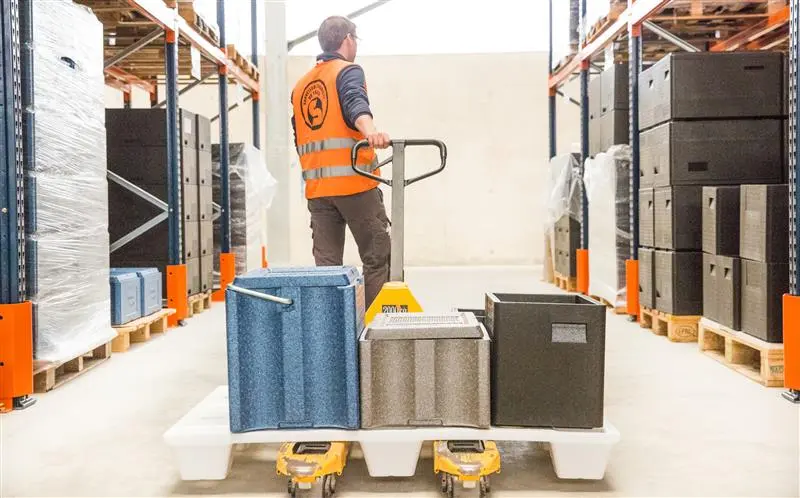
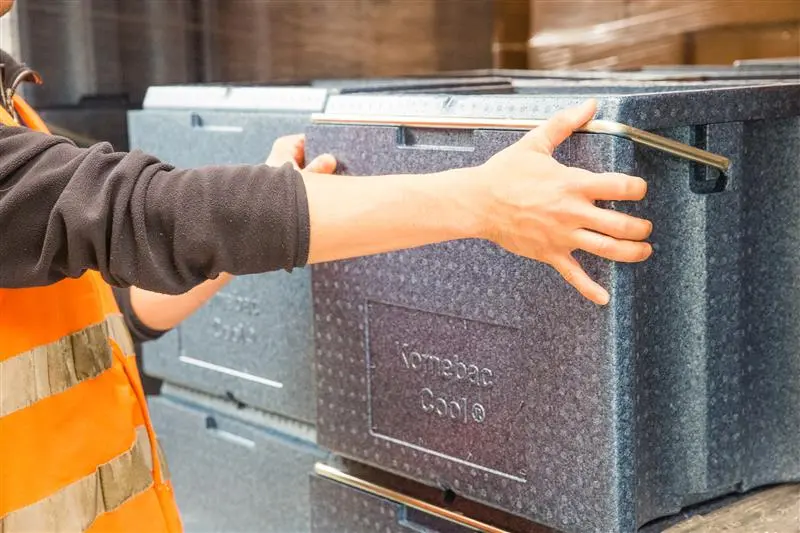
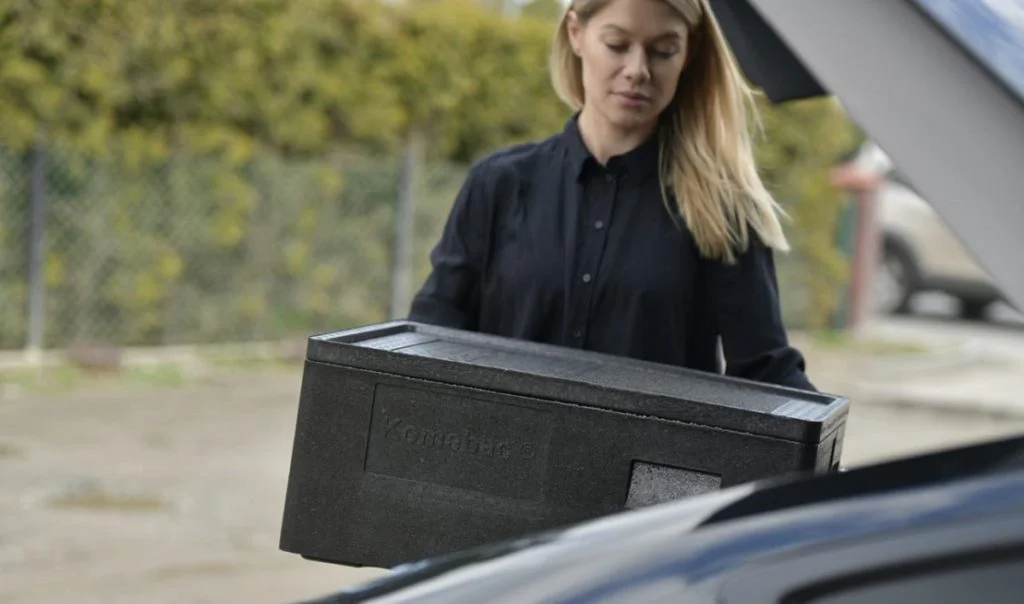
Lightweight containers are the primary lever for improving working conditions. An expanded polypropylene (EPP) container weighs less than 2 kg, compared with 4 to 6 kg for a traditional injected plastic container. This 50-70% reduction in weight transforms the daily lives of operators, who handle several hundred containers a day. Gestures become smoother, postures less awkward, and the risk of MSD significantly reduced.
The modularity of our solutions provides invaluable operational flexibility. Nestable containers reduce the volume occupied by empty returns by 30-60%, optimizing reverse logistics. Adjustable internal cushioning systems adapt to different product references, avoiding the multiplication of specific containers. Compatibility with European pallets and automated storage and order-picking systems guarantees seamless integration into existing infrastructures.
The closed-cell bead foam structure also offers a significant acoustic advantage. In warehouses equipped with conveyors, EPP bins considerably reduce noise pollution compared with traditional rigid solutions, thus improving the working environment for teams.
Thermal insulation and goods protection: packaging for 15-25 °C
Maintaining a controlled ambient temperature between 15 and 25°C requires appropriate thermal insulation solutions. Unlike refrigerated or frozen transport, this temperature range does not require active cold production, but does call for effective protection against external temperature variations.
Expanded polystyrene (EPS) and expanded polypropylene (EPP) offer interesting isothermal properties thanks to their cellular structure. This cellular architecture limits heat transfer by conduction and convection, creating an effective barrier against temperature variations. Solutions can maintain 15-25°C for up to 72 hours, depending on configuration and qualification.
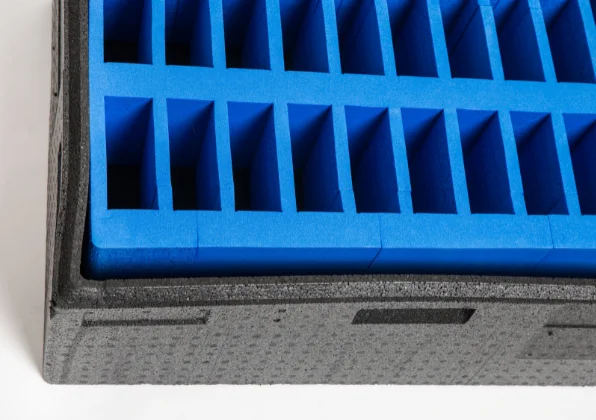
Mechanical protection completes the isothermal system. Internal foam cushions absorb the shocks and vibrations inherent in transport, preserving the integrity of bottles, pumps and decorated packaging. Tailor-made inserts can be designed to perfectly match product geometry, eliminating any movement likely to cause scratches or breakage. Protection against light, provided by opaque walls or specific tints, preserves light-sensitive formulas from degradation.
Personalization and reuse: enhancing the brand and the environment
Logistics packaging becomes a communication medium in its own right. Marking technologies make it possible to integrate brand logos, distinctive color codes or add QR codes directly onto containers. This personalization reinforces the brand’s visual identity throughout the supply chain, right up to the final point of delivery.
The reuse of containers is an obvious response to environmental and economic requirements. A PPE container designed for reuse can undergo several hundred cycles without any significant degradation in performance. Each reusable bin replaces the equivalent of 1,000 single-use cartons*, generating substantial savings in purchasing costs and waste management. The estimated lifespan of 10 to 15 years for a quality PPE bin guarantees a rapid return on investment.
Advanced functionalities further enhance the value proposition. RFID or NFC identification enables individual container traceability, facilitating stock management and rotation tracking. Secure closure systems ensure that products remain tamper-proof during transport. Water-, air- and dust-tightness preserves the integrity of contents in all storage and transport conditions.
*More information in the white paper Rotational packaging
Cosmetics logistics
Packaging 2.0, packaging, boxes...
A project, an idea?
How do you set up a high-performance cosmetics supply chain?
Transforming the cosmetics supply chain requires a methodical approach, from initial diagnosis through to steering continuous improvement. Each step must be carefully planned to ensure that performance, quality and sustainability objectives are met.
Flow diagnosis and evaluation criteria
The initial diagnosis is the foundation of any logistics optimization project. It involves precisely mapping existing flows: volumes handled, frequency of movements, distances traveled, transit times, storage and transport conditions.
Analysis of the products transported enables us to identify specific constraints: thermal sensitivity of formulas, fragility of packaging, unit value of references. Environmental conditions must be assessed at every stage of the chain: warehouse temperature and humidity, exposure during transport, risk of impact during handling.
Ergonomic assessment of workstations reveals the risk factors for MSDs: weight of loads handled, picking and depositing heights, imposed cadences, repetitive movements. Claims indicators (breakage rate, customer complaints, product returns) complete the diagnosis and help quantify priority areas for improvement.
Selection of suitable packaging solutions and materials
The choice of materials determines the overall performance of the solution. Expanded polypropylene (EPP) stands out for its exceptional resilience: after repeated mechanical stress, it returns to its original shape with no loss of performance. This property makes it the reference material for reusable packaging subjected to intensive cycles.
Expanded polystyrene (EPS) offers excellent isothermal properties at a competitive cost. Graphitized versions further enhance thermal insulation performance.
Selection must integrate all performance criteria: thermal protection, shock absorption, lightness, ease of cleaning, service life, recyclability. Analysis of the total cost of ownership (TCO), including initial purchase, use, maintenance and end-of-life costs, enables an objective comparison of the different options, and justifies investment in premium solutions.
Knauf Industries the solution for your innovative cosmetics packaging
Knauf Industries combines recognized materials expertise, customized design capabilities and a strong environmental commitment to support cosmetics players in transforming their supply chain.
Isothermal and hygienic solutions for sensitive products
Knauf Industries’ standard isothermal range meets the temperature-controlled requirements of the cosmetics industry. Containers qualified for the 15-25°C range are designed to help preserve sensitive active ingredients during transport and storage. Customized solutions can be developed for specific thermal constraints.
The intrinsic properties of the materials facilitate compliance with hygiene standards. Smooth, non-porous surfaces withstand cleaning and disinfection protocols. Watertight containers protect products from external contamination. Traceability via RFID/NFC identification enables the history of each container to be tracked, guaranteeing compliance with regulatory requirements.
Materials and design expertise for lightweight, high-performance packaging
As the leading processor of expanded polystyrene (EPS) and the market leader for EPS and EPP parts, Knauf Industries masters the technologies involved in shaping cellular foams. This expertise enables us to offer optimized solutions for every application: cellular molding of expanded beads for complex geometries and large production runs, cutting and machining for prototypes and small quantities.
Knauf Industries’ ID Lab design office and Customer Success team work with customers to co-design tailor-made solutions. From specification analysis to functional prototyping, Knauf Industries engineers work closely with packaging and logistics teams to develop containers perfectly adapted to the specific constraints of each project. Numerical simulations and real-life tests validate performance before industrialization.
Comprehensive support: from concept to production and reuse
Knauf Industries offers comprehensive support, from feasibility study to recycling. Our sales and technical teams are involved right from the scoping phase to understand the specific challenges of each project and propose the most appropriate solutions.
The Knauf Circular® program organizes the collection and recycling of end-of-life containers. Recovered materials are reused in the manufacture of new products, thus completing the circular economy cycle. This approach enables cosmetics companies to respond concretely to the requirements of PPWR regulations, and to achieve their CSR objectives in terms of waste reduction and carbon footprint.
Knauf Industries solutions are designed to meet the demands of demanding supply chains, including those in the cosmetics sector. Komebac® containers, isothermal ranges and customized cushioning are designed to help protect products, ensure operator ergonomics and reduce the environmental footprint.
Conclusion: packaging, the key to a successful cosmetics supply chain
Controlled temperature, zero breakage, preserved operators, assured circularity: logistics packaging is no longer a simple container, it’s a performance lever. Knauf Industries’ EPP and EPS solutions tick all the boxes: lightweight to reduce MSD, isothermal to protect sensitive assets, resilient to eliminate breakage, recyclable to meet environmental requirements. For cosmetics brands, it’s an opportunity to combine product quality, team well-being and CSR commitment. Ready to transform your supply chain? Contact the experts Knauf Industries for a personalized study.
Other articles that may interest you
Link to Blog-
 Read more Read more
Reusable plastic bins: from standard to made-to-measure
In industry, not all plastic bins are created equal. Standard models are often disposable or ill-suited, resulting in wasted space,… -
 Read more Read more
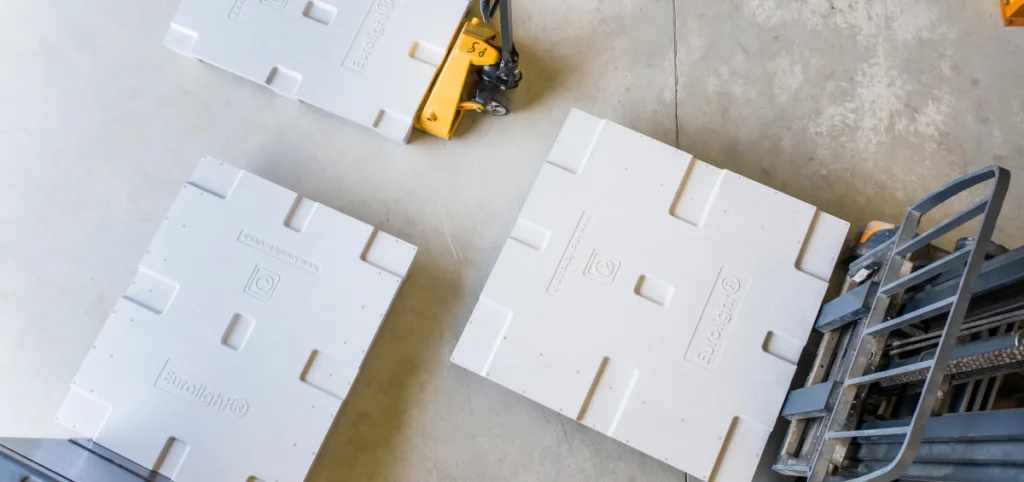
5 Reasons to Switch to an Expanded Polystyrene Palett
Faced with the tightness of the wood pallet market and the risk of shortages, there are other solutions available to… -
 Read more Read more
Innovative Component Packaging Solutions: EPS and EPP Materials
Assembly lines put together different components from various suppliers to create a final product, be it a car, a refrigerator…
Need more information?
Contact our team of experts