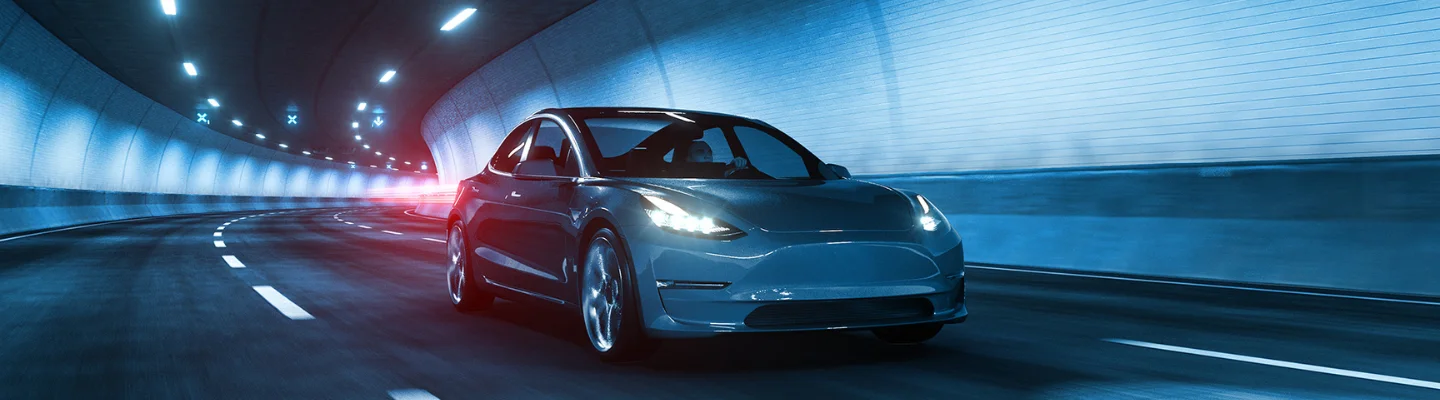
Today, mobility is changing (vehicle electrification, increasingly demanding environmental requirements, new urban uses, etc.) and materials play a strategic role. Lightening vehicles, improving their safety, optimizing their energy performance: these objectives rely heavily on innovation in materials.
EPP (expanded polypropylene) is gradually emerging as the material of choice. Although still little-known, this material has the right characteristics to meet the challenges of modern mobility.
In this article, we take a look at what EPP is, why it is attracting growing interest in the transportation sector, and how it can be used in practice to design more sustainable and efficient mobility solutions.
What is EPP?
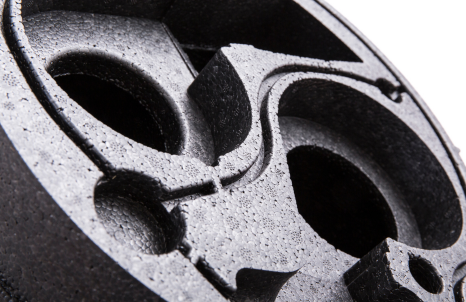
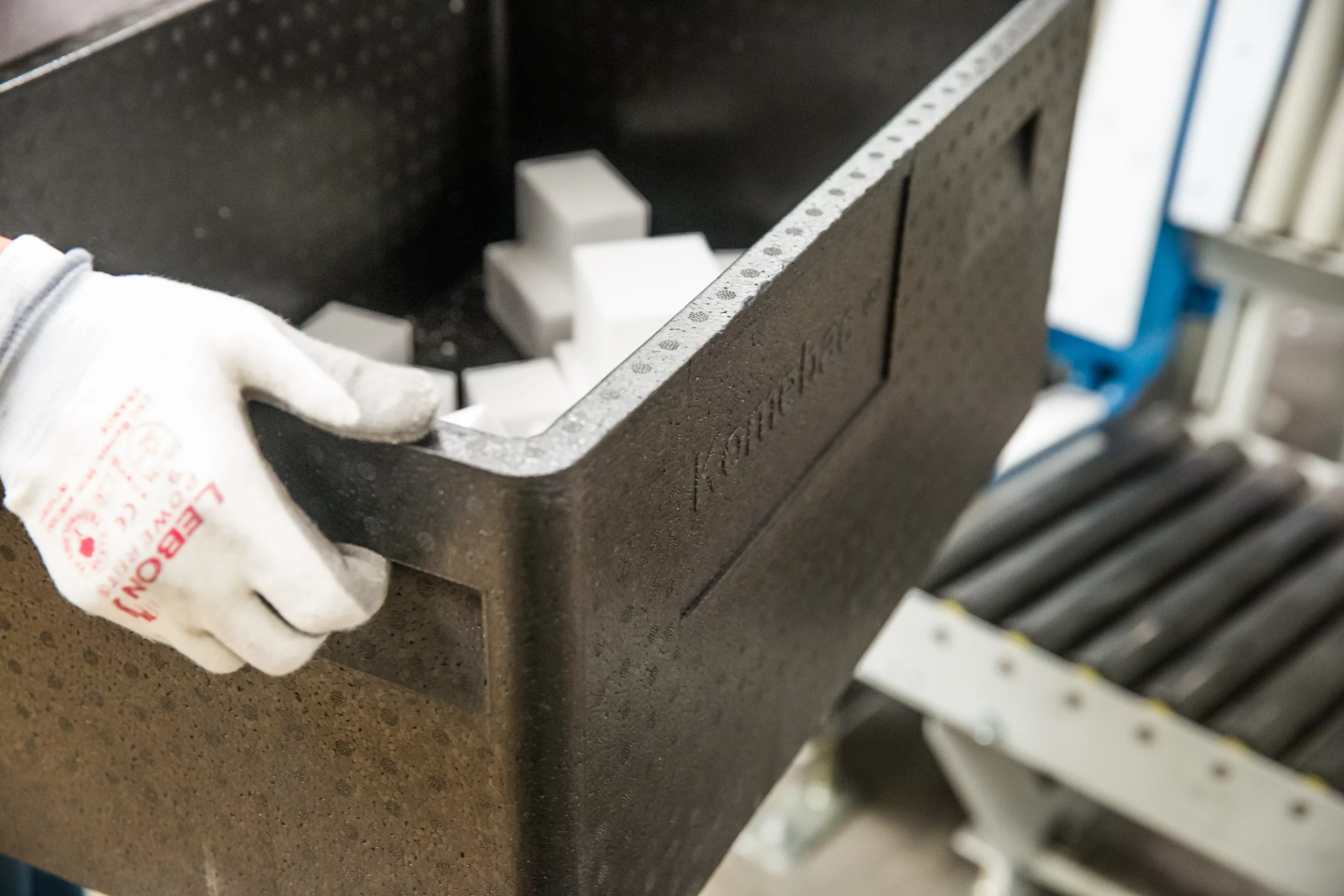
EPP, or expanded polypropylene is a technical foam derived from polypropylene. It takes the form of a honeycomb structure, composed of expanded microbeads that give it both lightness and strength.
What sets this material apart is its ability to absorb energy while retaining its shape after deformation. In other words, it can withstand repeated shocks without deteriorating rapidly, making it an attractive material for demanding applications.
EPP is also a modular material. Its density can be adjusted according to need, allowing us to play with rigidity, flexibility or absorption capacities. It can also incorporate technical functions (inserts, complex shapes), facilitating the design of multifunctional parts.
Why is the EPP of such interest to the mobility sector?
The mobility sector (automotive, rail, micro-mobility, electric vehicles, VELIs) is facing several major challenges: reducing emissions, improving safety, optimizing costs and adapting to new uses. And it’s precisely the EPP that enables us to meet several of these challenges:
Lightweighting and energy efficiency
Vehicle weight is directly linked to energy consumption. By replacing certain heavier materials with EPP, it is possible to reduce overall weight. This helps to improve energy efficiency, especially for electric vehicles, where every kilogram counts in terms of range.
Safety and shock absorption
Thanks to its structure, EPP is excellent at absorbing energy. It is capable of distributing forces in the event of impact, thus protecting occupants or sensitive vehicle components. This is a major advantage for sensitive areas such as bumpers, battery guards or internal structural elements.
Thermal and acoustic comfort
EPP also has thermal and acoustic insulation properties that can meet the challenges of tomorrow’s mobility. It limits temperature variations and reduces noise pollution inside vehicles. These characteristics enhance passenger comfort, an increasingly important criterion in modern mobility.
Durability and recyclability
EPP is part of a circularity logic. It is recyclable and can incorporate recycled materials. Its durability in use (resistance to chemical agents, impact and wear) also extends component life. EPP is part of an eco-design approach, with structures designed to last: parts that can be dismantled and replaced individually, facilitating maintenance and extending vehicle life.
Examples of EPP applications in the field of mobility
EPP is already used in a number of transport-related applications:
Energy absorption and safety
- Energy absorbers in bumpers
- Protective inserts and reinforcements
- Crash pads to protect sensitive areas
These elements play a particularly important role in impact management, improving overall vehicle safety.
Protecting batteries and electronic components
With the rise of electric vehicles and VELIs (intermediate light vehicles), battery protection is becoming essential. EPP is used for :
- Battery module shimming
- Impact protection
- Thermal insulation systems
It thus contributes to the reliability and safety of embedded systems.
Interior design and comfort
EPP is also present in the passenger compartment:
- Seat structures (cores, backrests, armrests)
- Multilayer flooring
- Boxes, storage and organizers
Modular parts design makes it easy to replace individual interior elements, without having to change a complete subassembly. These applications combine lightness, strength and comfort.
Air and temperature management
In ventilation and air conditioning (HVAC) systems, EPP is used for :
- Lightweight air ducts
- Thermal-acoustic screens
- Insulation
It contributes to the energy efficiency and thermal comfort of vehicles.
Urban mobility and micro-mobility
The EPP also has a place in lighter mobility solutions:
- Components for electric scooters and bicycles
- Protective elements
- Lightweight structures for urban vehicles
Its versatility enables it to meet the specific requirements of these new uses.
The advantages of the EPP for tomorrow‘s mobility
A truly relevant choice for meeting the challenges of tomorrow’s mobility, the EPP offers a number of advantages that enable manufacturers to design high-performance means of transport:
- Lightness: reduced vehicle weight
- Impact resistance: excellent energy absorption
- Resilience: ability to regain shape after impact
- Insulation: thermal and acoustic
- Chemical resistance: durability in demanding environments
- Recyclability: compatible with the challenges of circularity
- Design flexibility: adjustable density, function integration
- Modularity : possibility of designing parts that can be disassembled and replaced, promoting maintenance and reparability
Towards more innovative mobility
The EPP is fully in line with current trends in the transformation of mobility. By combining lightness, performance and durability, it paves the way for innovative technical solutions.
Its use in electric vehicles and VELIs, urban mobility and protection systems shows that it is now a concrete industrial lever.
By integrating the principles of reparability and modularity right from the design stage, it contributes to the evolution of industrial models towards more sustainable and responsible products.
Beyond the material, it’s the overall Knauf Industries approach that makes the difference: co-design, digital simulation, prototyping, industrialization key stages in taking full advantage of its properties.
Faced with the environmental and technological challenges of transportation, materials such as EPP play a decisive role. Their ability to improve vehicle performance while reducing their impact makes them particularly relevant solutions. While not a single answer to every challenge, EPP is an essential building block in the construction of smarter, safer and more sustainable mobility.
Knauf Industries can help you integrate these materials strategically, exploiting their potential while mastering their limitations. Taking into account maintenance, repairability and product lifespan right from the design phase becomes a key differentiation lever.
Would you like to benefit from the advantages of the EPP in the field of mobility? Don’t hesitate to contact us.