WHAT IS Foam MOLDING?
Foam molding is a manufacturing process used to produce parts made of foam with a cellular structure.
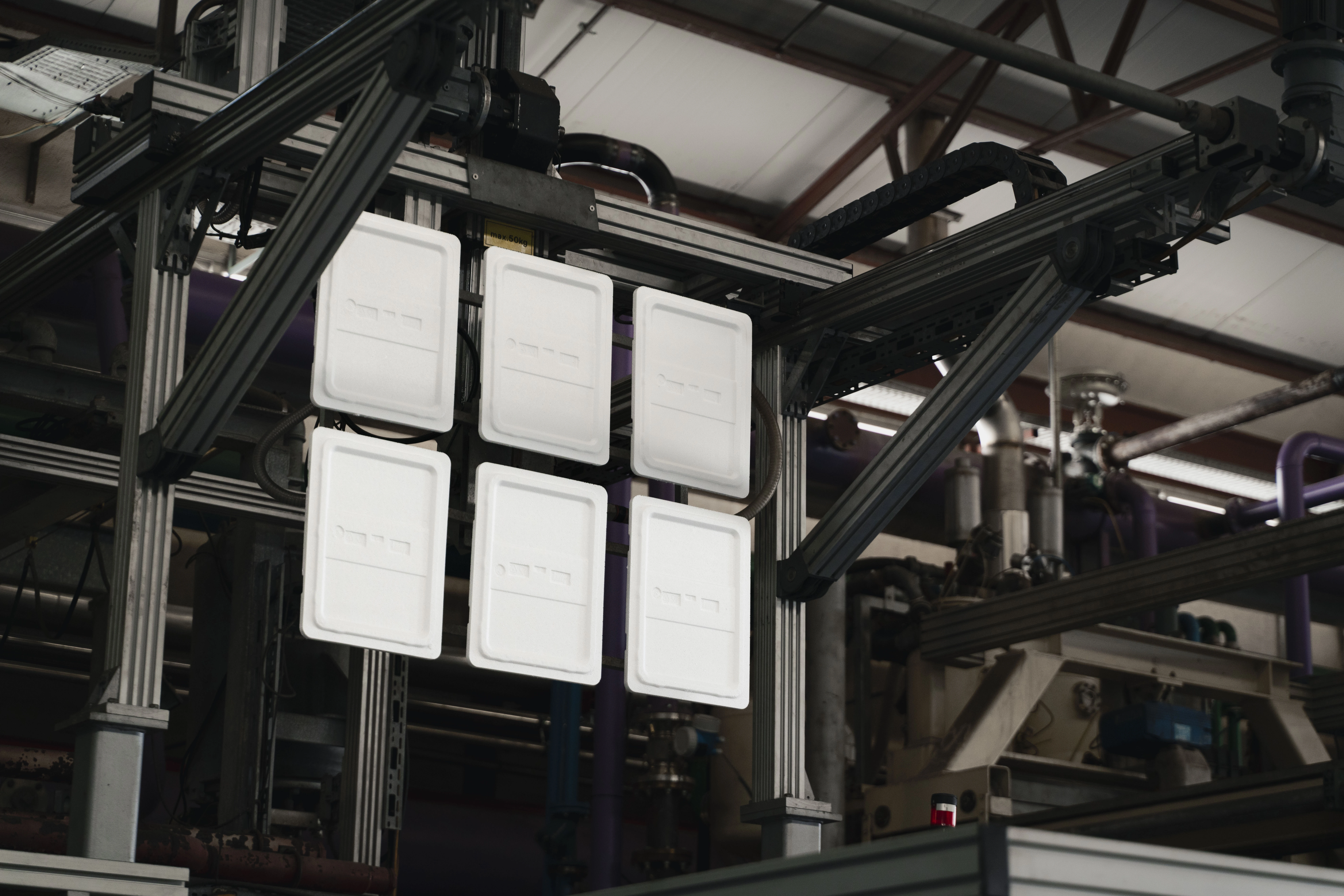
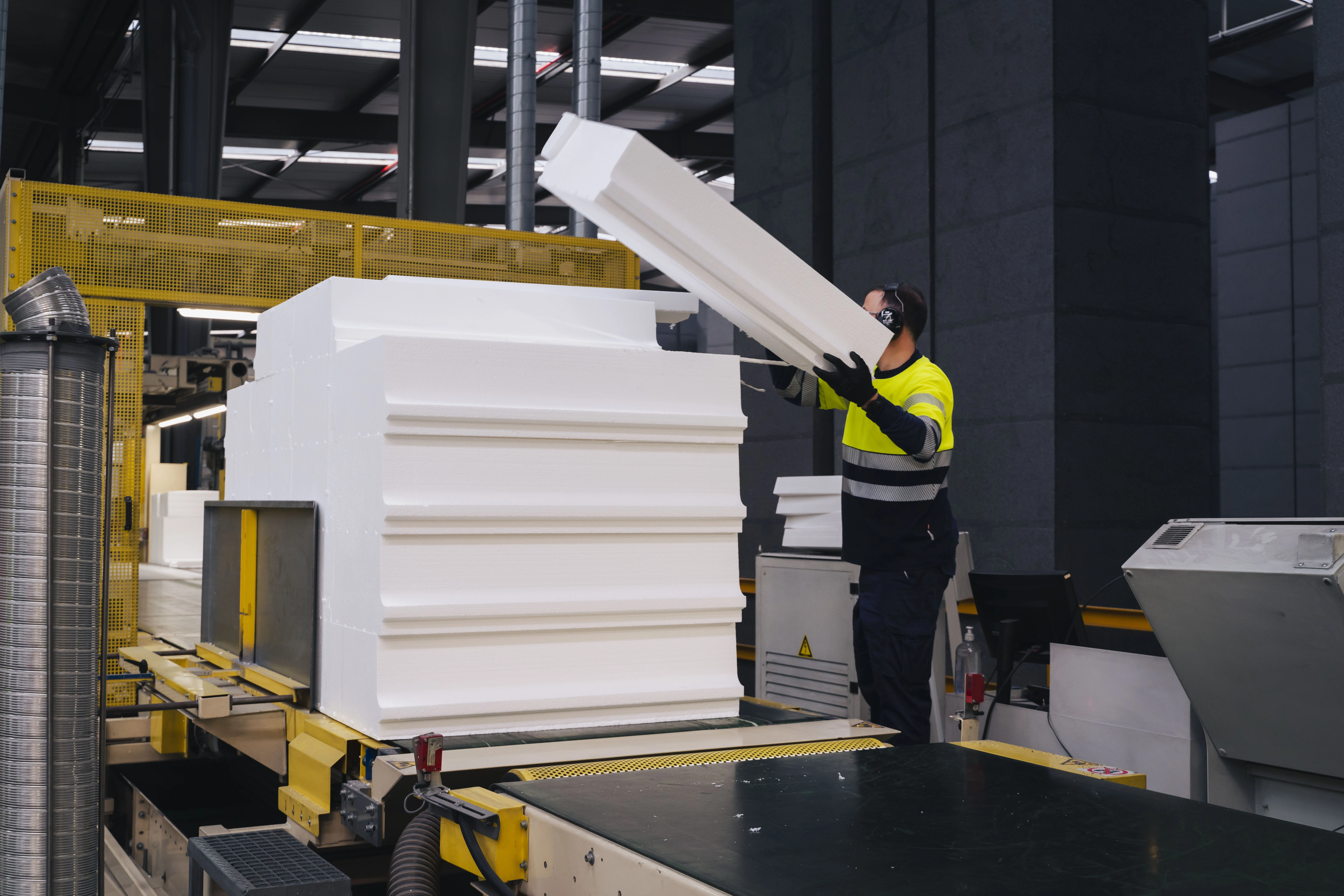
The foam molding process is a manufacturing technique that produces parts from cellular-structured foam. It involves filling a mold with a pre-expanded polymer, generally in bead form, which is then transformed using steam. Under the effect of heat, the beads expand, fuse together and conform to the geometry of the mold to form a lightweight, rigid and resistant part. This technique, commonly used with materials such as expanded polypropylene or expanded polystyrene, offers an excellent compromise between mechanical strength and low weight, making it particularly well-suited for lightweight applications.
We have been using foam molding for many years to create technical parts, protective packaging or thermal insulation solutions. This process produces components that are both lightweight and impact-resistant. They are recyclable in dedicated existing streams.
In an eco-design approach, we can help you benefit from the many advantages of this process through a range of circular raw materials to, for example, optimize the carbon footprint of your finished product.
In our factories, we use particle foam molding to produce custom parts tailored to your mechanical, thermal and logistical requirements.
How does foam molding work?
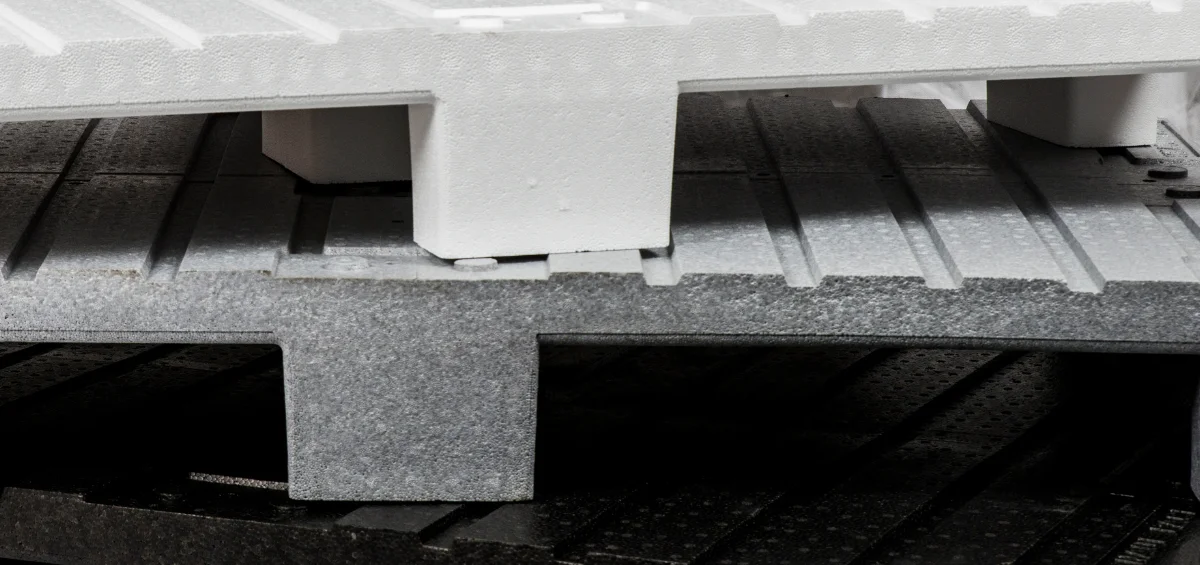
Used notably in part lightweighting processes, foam molding serves the manufacture of plastic components obtained from an expanded raw material. To achieve this final result, the process takes place in four main steps:
Pre-expansion
The beads of expandable raw material are heated using steam. They expand and reach the desired density through the action of the expansion agent.
Curing
After expansion, the beads are stored in silos to stabilize their internal pressure and ensure good behavior during molding.
Mold filling
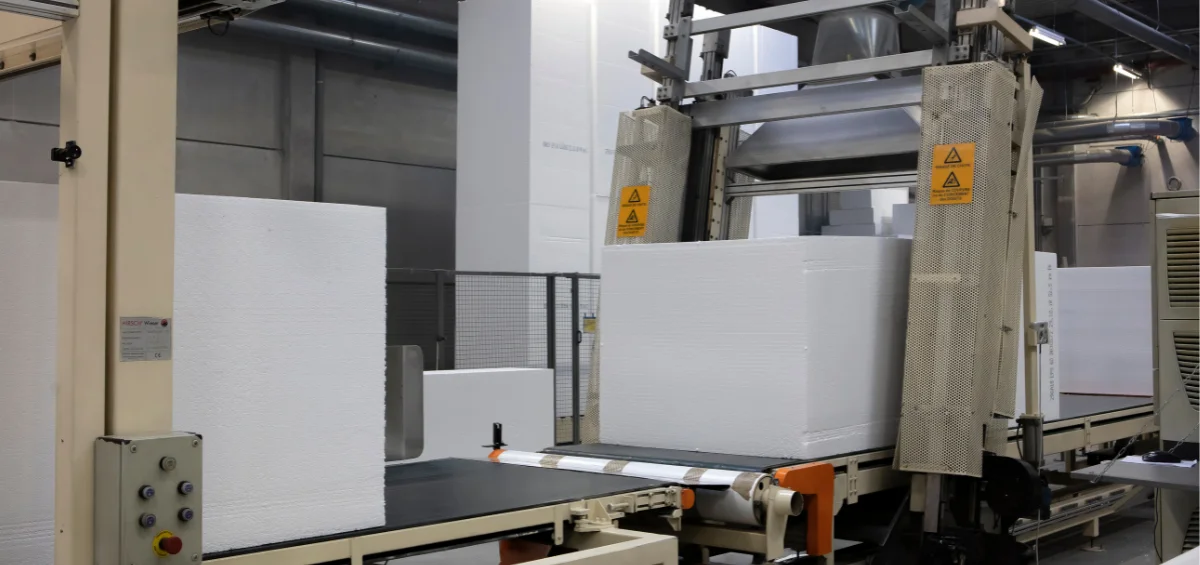
The expanded beads are injected into a mold. Under the effect of steam, they fuse together and take the final shape of the part.
Cooling and demolding
The part is cooled and stabilized in the mold. Once solidified, it is demolded and ready for finishing or assembly operations.
Ahead of the production phase, Knauf Industries can also integrate specific functionalities directly into your parts' specifications. Overmolding, bi-density, insert integration or functional elements: these solutions allow the mechanical, technical or functional characteristics of the component to be precisely adapted to your needs. Our approach opens up many design and optimization possibilities to meet each of your requirements.
After production, Knauf Industries can help you customize your foam-molded parts. With solutions such as screen printing, inkjet printing and sleeve labeling, we support both your technical requirements and your brand visibility.
Thanks to this process, we are able to mass-produce complex, lightweight and robust parts, adapted to the requirements of many industrial sectors.

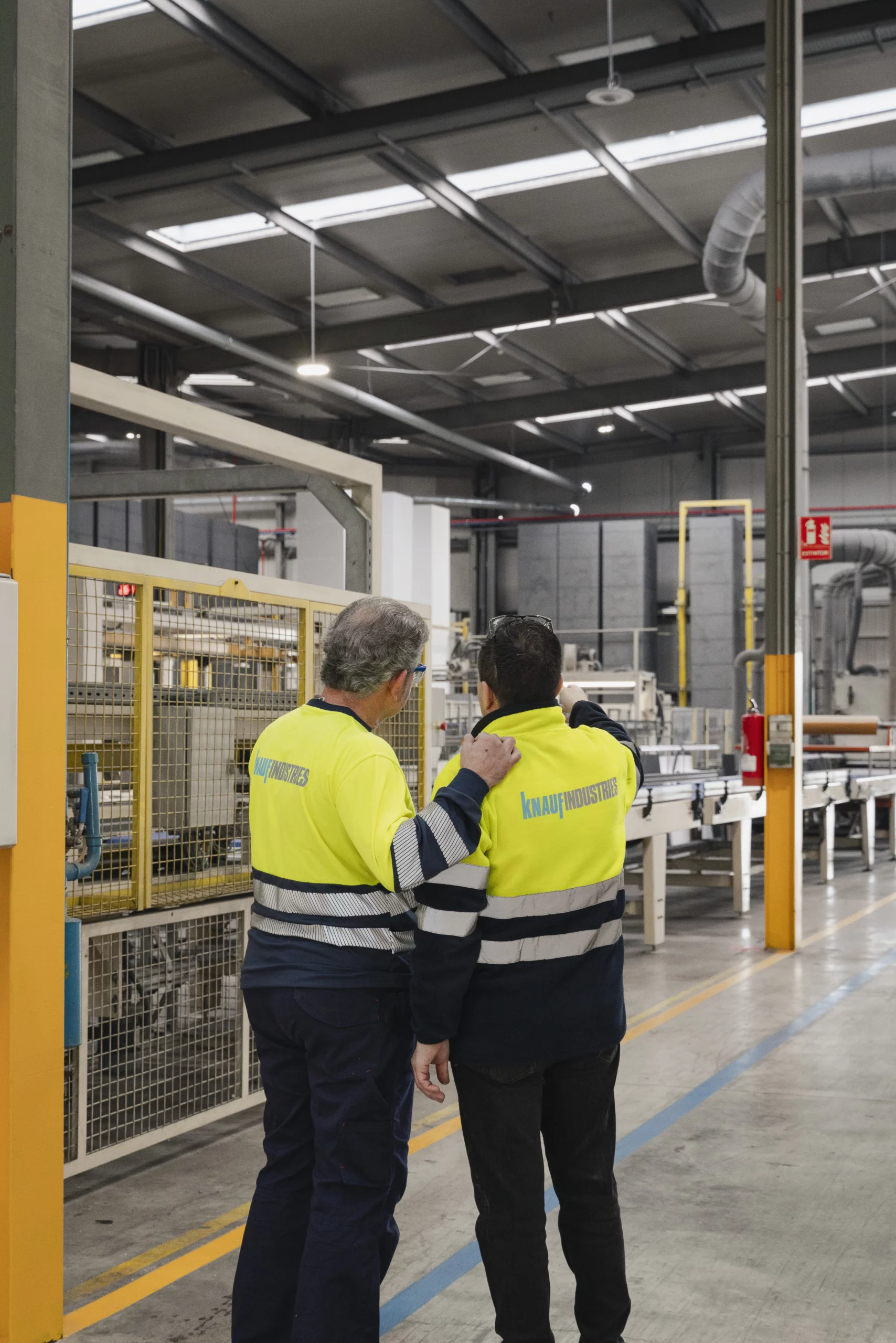
The advantages of foam molding for manufacturing your parts
Foam molding offers many advantages for the production of technical components and packaging:
- Ability to obtain parts with complex shapes and designs.
- Weight reduction thanks to a lightweight cellular structure.
- Excellent shock absorption to protect sensitive products.
- High mechanical strength despite low density.
- Effective thermal and acoustic insulation.
- Dimensional stability and shape precision.
- Materials that can be recycled in dedicated existing streams
Designed for a wide range of applications, from transport packaging and technical parts to industrial solutions for RV, aviation and HVAC.
Are you facing constraints related to weight, strength or repeatability? Do not hesitate to contact our teams to evaluate together whether foam molding could be the most suitable solution for your needs. We can also direct you to our other custom plastic part manufacturing processes, namely plastic injection, thermoforming and cutting.
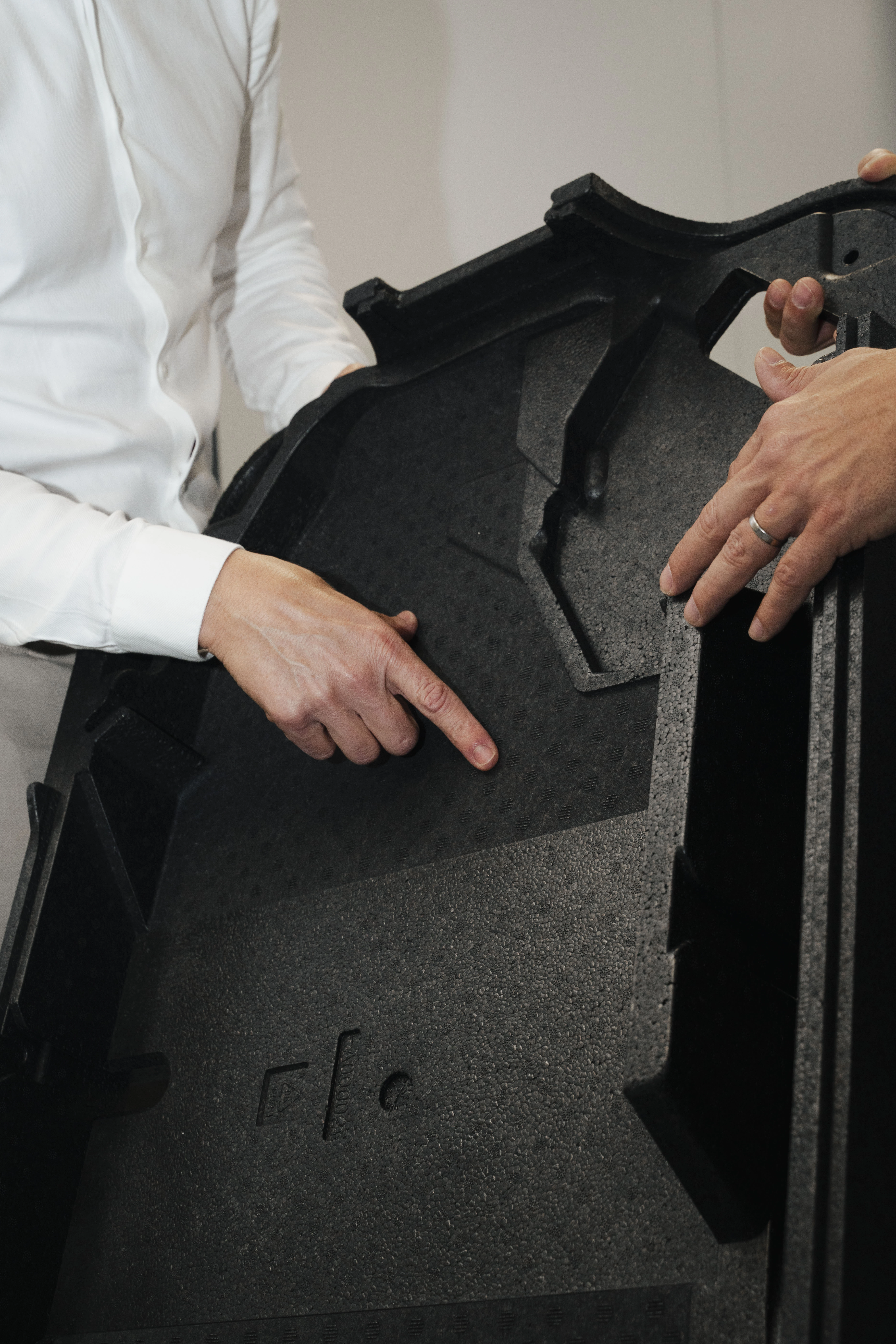
Knauf Industries: experts in foam molding
With more than 40 years of experience in expanded materials, Knauf Industries designs and manufactures custom foam-molded solutions for a wide range of industrial applications. In France and across our global production network, we support manufacturers with solutions tailored to their technical, logistical and production requirements.
Our expertise covers applications such as protective packaging, technical cushioning and industrial components for sectors including automotive, home appliances, logistics, RV, aviation and HVAC.
We provide end-to-end support, from design and prototyping to series production, with technical guidance at every stage of the project.
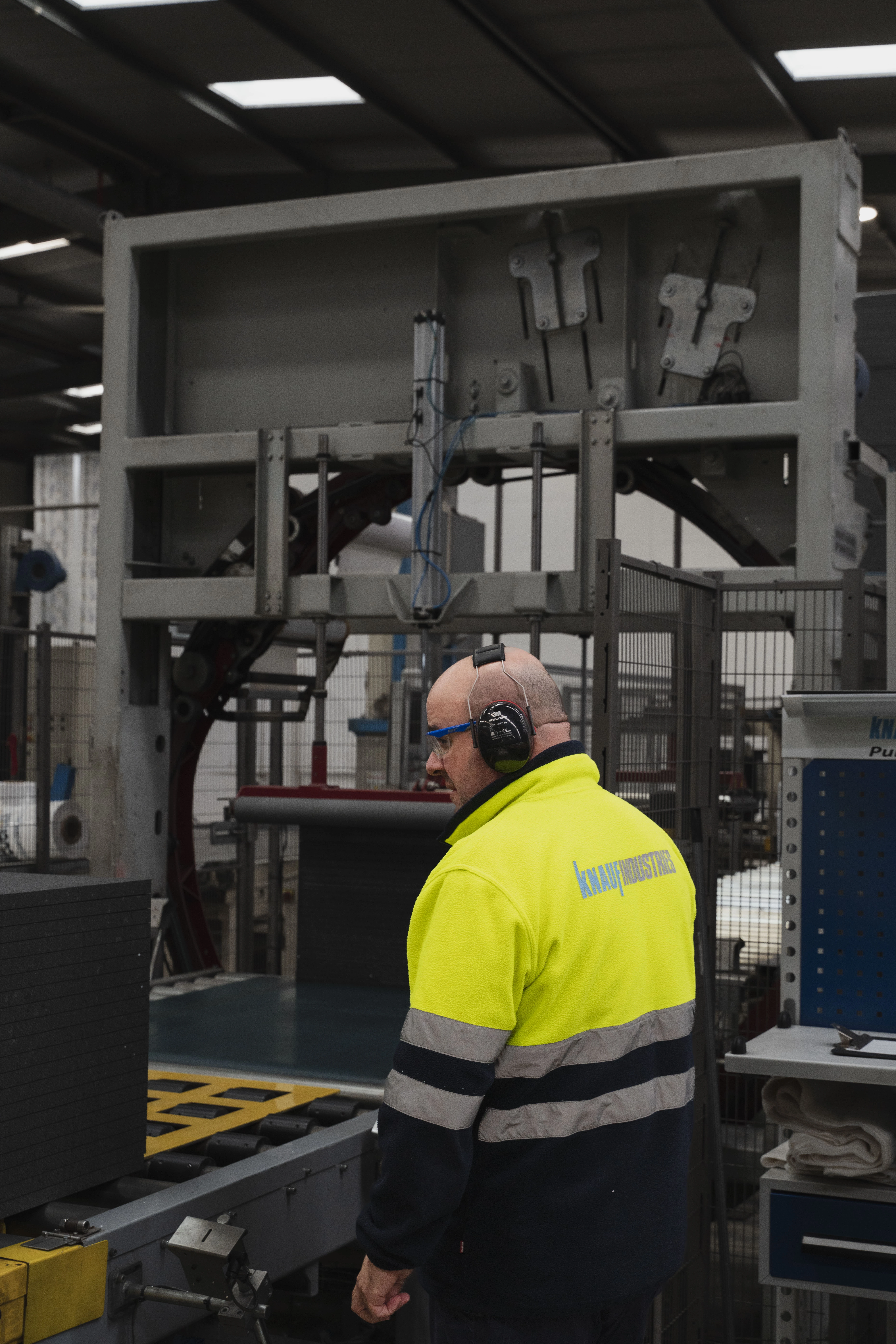
Our technical capabilities
To ensure reliable, high-performance production, Knauf Industries relies on modern equipment, a strong manufacturing footprint and more than 40 years of expertise in foam molding and plastics processing.
In France, our capabilities include:
- 12 production sites in France.
- 160 molding presses and cutting lines.
- 80 million parts produced per year.
- 310 employees specialized in cellular materials.

From feasibility study to manufacturing
Choosing Knauf Industries for the manufacture of your parts through foam molding means benefiting from a player with strong expertise. And this expertise is not only expressed on the production lines. Indeed, over the years, Knauf Industries has become a master in the field of co-development. In this context, we today accompany our clients from the assessment of their needs to the manufacture of parts with comprehensive, tailored support:
- Feasibility study and part design.
- Material selection according to your business constraints.
- Tooling production.
- Prototyping and technical validation.
- Launch of series production.
You are guided throughout the process by our Research & Development department, our design office and our testing laboratory to achieve a final result that ticks all the boxes of your project.
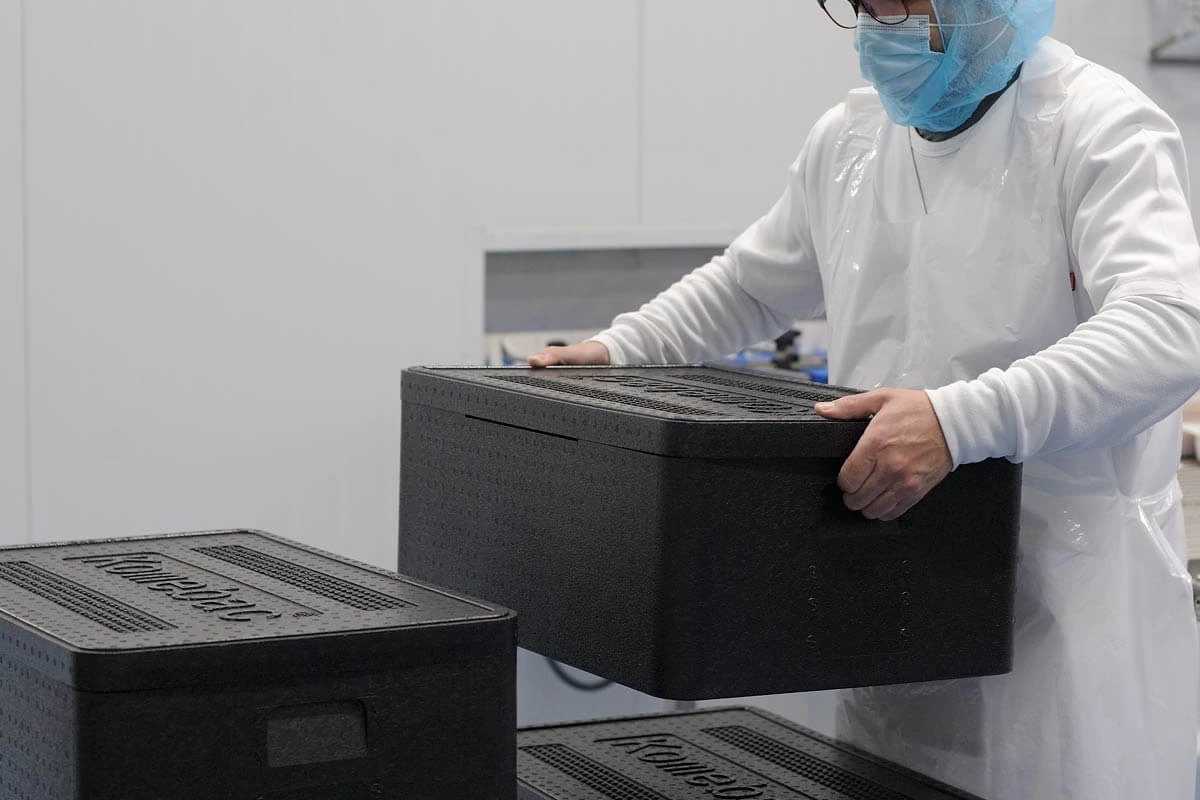
Materials used by Knauf Industries for foam molding
Because each industry has its own challenges and needs, Knauf Industries offers a wide range of materials usable in foam molding to meet all your requirements:
EPP (Expanded Polypropylene)
Technical and highly resistant material, EPP allows us to produce robust parts that are resistant to impacts. It is notably suitable for the HVAC, automotive, and food industries.
EPS (Expanded Polystyrene)
Lightweight, economical and recyclable material, EPS offers excellent thermal insulation in particular. It is widely used for thermal insulation products, protective packaging and logistics solutions.
Circular materials range
Knauf Industries also offers alternative materials, such as RELOOPP®, RELOOPS®, CELOOPS® or NEOPS®. These solutions can, for example, help you reduce the environmental impact of manufacturing your parts while meeting your other specific requirements (food contact, mechanical constraints, etc.).
Would you like to know more about the materials available for alveolar molding? Contact our teams.
Why choose Knauf Industries?
- More than 40 years of experience in foam molding and expanded materials
- 12 production sites in France and a global network of 38 sites worldwide
- Design and manufacture of custom foam-molded parts
- Lightweight and durable solutions for a wide range of industrial needs
- Technical support from design to series production
- Expertise across multiple industrial applications and sectors
Related Resources
 Brochures & Videos
Innovation in HVAC equipment design
Thanks to foam molding
ReadBrochures & VideosTechnical excellence and eco-design for your projects
Leaf through the brochure
ReadBrochures & VideosRevolutionizing vehicle design
With EPP Solutions
Read